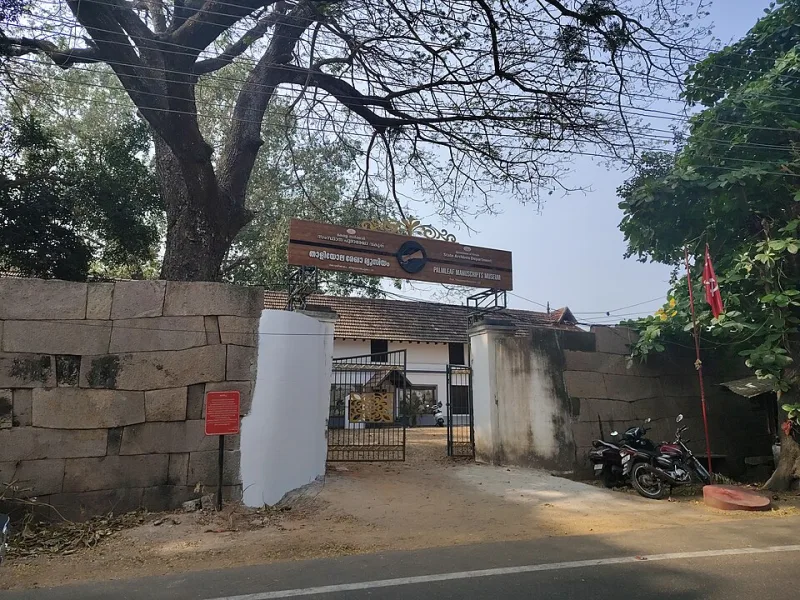
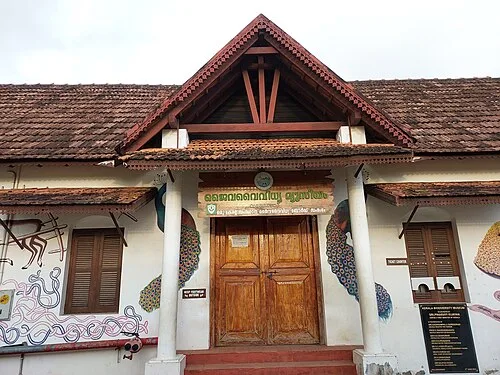
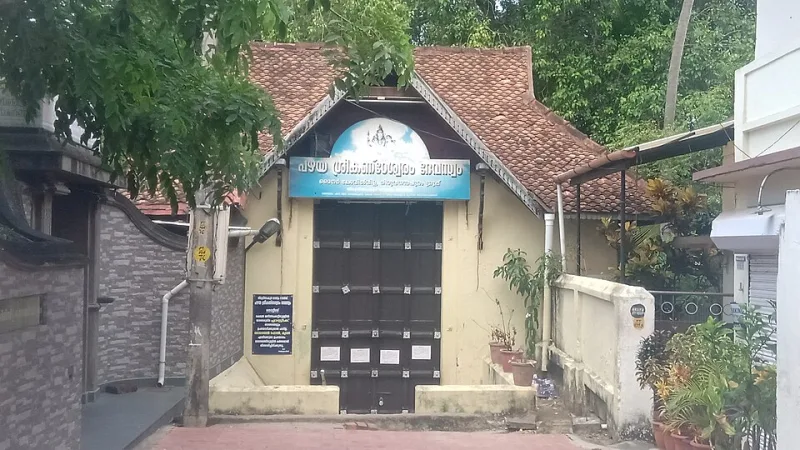
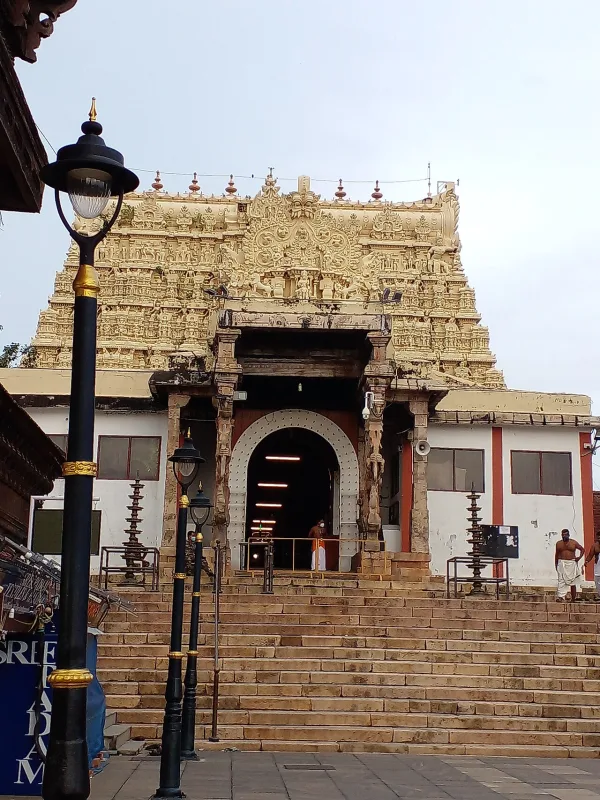
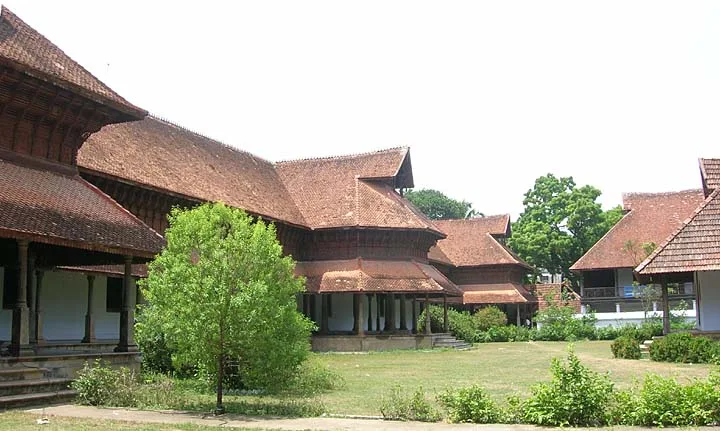
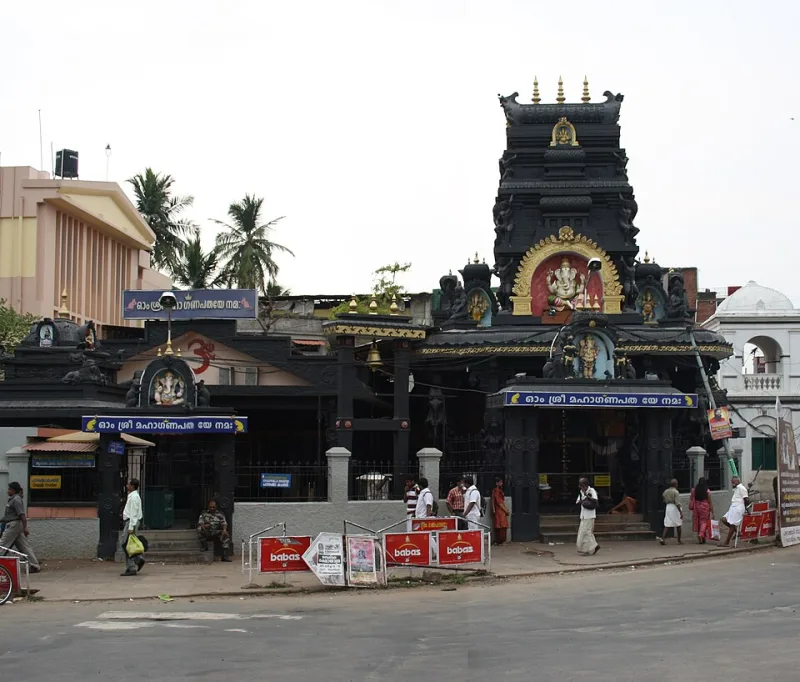
An old goddess temple beside a pond at Palkulangara, whose name legend traces to a pool of milk raised by Arjuna's arrow.
At a glance
What: A temple of the goddess in two forms, with a pond and grove.
Where: Palkulangara, west of the Padmanabhaswamy temple.
When: Reported darshan 5.30 to 10.00 and 5.00 to 8.00.
How: By autorickshaw from East Fort, West Fort or Pettah.
By whom: The Sree Palkulangara Devi Temple Trust.
For whom: Devotees and visitors drawn to temple legends and traditional architecture.
The temple
Palkulangara Devi temple is counted among the old shrines of the capital. It is praised as a fine example of vastu vidya, the traditional science of Kerala building, and keeps a pond behind and a sacred grove within its grounds. Though in the middle of a busy district, it preserves a measure of quiet.
The milk pond
Legend says that Arjuna installed the principal deity and then shot an arrow into the earth, opening a pool of milk from which the image was bathed. The place name is explained from pal, milk, kulam, pond, and kara, bank: the banks of the pond of milk. The pond lies behind the temple.
Arjuna in Kerala
The Pandava archer appears in many local legends across the state, often while doing penance, meeting Shiva in the guise of a hunter or establishing a shrine during exile. Such tales connect a neighbourhood to the Mahabharata. They are sacred narrative and cannot be placed in a dated history.
Nala's swan
The temple is also said to figure in tellings of Nala and Damayanti, where Nala asks the swan that carries his message to visit Palkulangara Devi and receive her blessing on the way. The Nala story is much loved in Kerala through Unnayi Warrier's Kathakali play, composed in the eighteenth century.
Tripura Sundari
The goddess is worshipped as Tripura Sundari, the beauty of the three worlds, a form of Parvati central to the Shakta tradition of Sri Vidya. She is shown as gracious and sovereign. Devotees ask her for harmony, learning and well-being. The temple manifestation is also spoken of as Durga, the Bhagavathi of the shrine.
Oorutu Amma
Kali is the second principal power, called here Oorutu Amma, the mother who feeds, and regarded as the sister of the main deity. Oorutu is a ritual meal offered to children or the goddess. The pairing of a gentle sovereign and a fierce provider expresses two sides of motherhood.
Attendant deities
The temple also houses Ganesha, Shiva honoured as father of all, Nagaraja and Nagayakshi, Ayyappa, Brahmarakshas, Veerabhadra, regarded as brother of the main deity, and the nine planets. The shrines were remade according to a recent astrological enquiry.
Brahmarakshas
A Brahmarakshas in temple belief is the spirit of a learned person who, through some wrong, remained bound to the earth and was pacified by being given a place of worship. Offerings of lamps and sweet milk rice are customary. The idea carries a moral: learning without right conduct brings unrest.
The grove
The kavu with its serpent images keeps shade and greenery within the compound. Offerings of turmeric and milk are made to the serpents, chiefly on the Ayilyam star. Visitors should keep to paths, pick nothing and leave dead leaves where they lie, since they shelter small creatures.
Karthika
Karthika is counted as the star of the deity. Monthly Karthika days and the great lamp festival of the month of Vrischikam, in November or December, are popular with goddess worshippers. Rows of oil lamps along walls and steps make an evening visit especially attractive.
Meena Bharani
The annual festival, the Meena Bharani Mahotsavam, falls in the month of Meenam, in March or April. Bharani is a star strongly associated with Bhadrakali worship across Kerala. Processions, special offerings and cultural programmes mark such festivals. Confirm the year's dates at the temple.
Mandala season
From mid-November the temple also observes the forty-one days of the Mandala season, with additional lamps, songs and offerings connected with the Sabarimala vow. Evenings are lively and welcoming, and pilgrims in dark clothing are a familiar sight.
Building traditions
Kerala temple architecture sets the sanctum within an enclosure, with halls for offering, food preparation and processions arranged by measured proportion. Sloping tiled or copper roofs, timber joinery and laterite or granite walls answer the heavy rainfall. Compare what you see with these principles.
Offerings
Archana, lamps, sweet payasam, kumkumam and flowers are the usual offerings to the goddess. Some devotees sponsor the full day's worship on their birth star. The counter lists what is available and the charges.
Legend and fact
That the temple is old and loved is evident. The installation by Arjuna and the swan's visit belong to legend and literature. No founding inscription is cited, so visitors should enjoy the stories without converting them into dates.
Visiting with respect
Observe the dress code, remove footwear, keep phones silent and refrain from photography inside. Keep the pond clean. Move clockwise and let worshippers have the space before the sanctum.
Getting there
The temple is about a kilometre from Pettah junction, seven hundred metres from West Fort junction and a kilometre and a half from Chakka bypass junction. Pettah railway station, Central station and the airport are all near. Autorickshaws are easy to find.
When to come
Mornings are peaceful and evenings are lit by lamps. The cool months are best for walking. Festival days in March and April are warm, so carry water.
Nearby places
Sree Padmanabhaswamy temple, West Fort, Shanghumukham beach, Sreevaraham temple and the Pazhavangadi Ganapathi temple are within reach.
Facilities
Shops, restaurants, banks and clinics surround the area. No entry fee applies.
Help complete this page
Share festival dates, memories of the pond and photographs taken with permission through the links here.
A walk through the old western side
The lanes between West Fort and Pettah hold traces of the older city: gateways, tanks, family houses with tiled roofs and small shrines tucked between newer buildings. A visit to Palkulangara fits naturally into a slow walk here. Start early, before the traffic builds, and ask residents which ponds survive. Their answers show how much the water map of the capital has changed within living memory.
Stories for children
The arrow that opened a pool of milk and the swan that carried a lover's message are tales a child will remember. Tell them on the way, then let the child look for the pond and compare story with sight.
A closing note
Leave the lanes as quiet as you found them.