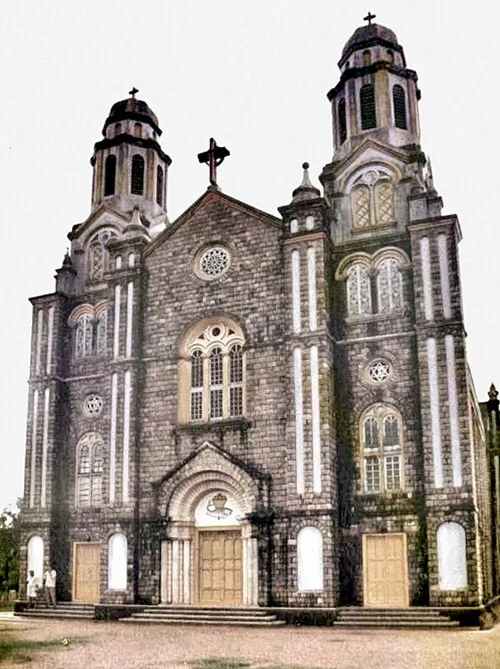
An old Devaswom temple of the child Subrahmanya at Ulloor, largely built in granite, with a round sanctum, fine woodwork and a large pond.
At a glance
What: A temple of Subrahmanya as a youth.
Where: Kochulloor village in the Ulloor part of Thiruvananthapuram.
When: Daily worship; Subrahmanya festival days are busiest.
How: By city bus to Ulloor and a short walk or autorickshaw ride.
By whom: The Travancore Devaswom Board.
For whom: Devotees of Murugan, students of temple architecture and city visitors.
The temple
In the middle of a busy part of the capital stands a temple described as ancient and unusual for being built almost wholly of granite. Its deity, Balasubrahmanya, the young Subrahmanya, faces east. The combination of stone construction, delicate timber carving and a generous pond makes it one of the more handsome shrines of the city.
The round sanctum
The sanctum is circular, a form called vatta sreekovil in Malayalam. Round shrines are among the distinctive types of Kerala temple architecture, topped by a conical roof that sheds rain evenly on all sides. The shape encloses a square inner chamber in many examples, joining the ideas of heaven and earth.
The pillared hall
In front is a porch or hall resting on sixteen granite pillars. Such a structure gives shelter to rituals and frames the devotee's view of the doorway. Granite is harder to carve than the softer stones used in some other regions, so precise pillars and mouldings reflect considerable skill and patience.
Wood carving
The sanctum is surrounded by beautiful carvings in wood. Kerala's temple carpenters portrayed episodes from the epics and Puranas on wall panels and brackets, a library in timber for those who came to pray. View them from the permitted side, with the light falling across the relief.
The story of the installation
Tradition says the temple belonged to the rulers of Nedumangad, and that its principal deity was then Ayyappa, now placed outside. Sastha appeared to a king in a dream and asked that his brother Subrahmanya also be installed there. The king had the consecration carried out under his own supervision.
Reading the legend
Stories of royal dreams explain why a newer principal deity came to share, or take, the place of an older one. They may preserve a memory of real change in patronage and worship, expressed in sacred language. The account of the Nedumangad connection is a valuable clue, though it has not been tested here against records.
The Nedumangad rulers
Before Marthanda Varma consolidated Travancore in the eighteenth century, the south was shared among branches of the Venad family and local chiefs, each with temples under their care. A principality associated with Nedumangad was one of these. After annexation, temple management passed gradually into the hands of the larger state.
The pond
A broad rectangular pond lies before the temple. The account explains that it is closely linked with the installation, as a means of calming the fierce aspect of the deity: water set facing a powerful image is believed to cool it. Many Subrahmanya and Shiva shrines show the same idea.
Subrahmanya
Known also as Murugan, Skanda and Karthikeya, he is the son of Shiva and Parvati, commander of the divine army and rider of the peacock. In the story of his birth, six sparks from Shiva became six infants nursed by the Krittika stars, whom Parvati embraced into one child with six faces.
The vel
His weapon is the vel, a leaf-bladed spear received from the goddess. With it he defeats the demon Surapadman, who in the end becomes the peacock and the rooster that serve him. Devotees read this as the transforming rather than merely the destroying of pride. Skanda Shashti celebrates the victory in October or November.
Thaipooyam
The full-moon season of the Pooyam star in January or February brings Thaipooyam, when devotees carry kavadi, a decorated arch borne on the shoulders, in fulfilment of vows. Dancing with the kavadi to drum and pipe is a striking sight. Some participants undertake severe austerities; watch respectfully and give them room.
Offerings
Panchamritam, a sweet mixture of fruit, jaggery and ghee, milk abhishekam, sandal covering, red flowers and archana are favoured. Tuesdays and the sixth lunar day are considered special. Rates are fixed by the Devaswom Board and paid at the counter against a receipt.
The temple elephant
The published account names an elephant, Ulloor Karthikeyan, as belonging to the temple and well known among Kerala's festival tuskers. Elephants may die, be moved or be rested, so do not assume one will be present. Never approach, feed or photograph a captive elephant closely, and be mindful of its welfare.
Ulloor
The locality gave its name to Mahakavi Ulloor S. Parameswara Iyer, one of the great trio of modern Malayalam poetry with Kumaran Asan and Vallathol. Today the area is known for the nearby Government Medical College campus, hospitals and research institutions. The temple offers many patients' families a place of quiet.
Visiting with respect
Follow the traditional dress code, remove footwear, and switch off phones. Do not photograph inside. In Subrahmanya temples devotees circle the shrine clockwise, often several times. Keep clear of the pond edge where steps are slippery, and use it only as temple rules allow.
Getting there
Ulloor junction is served by frequent buses on routes to Medical College, Sreekariyam and Kazhakkoottam. Thiruvananthapuram Central station is about seven kilometres away and the airport a little farther. Parking is limited, particularly on festival days.
When to come
Early morning shows the stone and woodwork in good light. Thaipooyam and Skanda Shashti are vivid but crowded. The cooler months are comfortable, while monsoon rain fills the pond to its best.
Nearby places
Akkulam lake and its tourist village, the Sreekariyam side with the Chempazhanthy Gurukulam, the Kesavadasapuram market and the museum compound are within reach.
Facilities
Hotels, pharmacies, banks and eating places abound around Ulloor and Medical College. Entry is free.
A visitor from the hospital side
Many who come here are staying nearby while relatives receive treatment. The temple asks nothing of them but quiet. A few minutes beside the pond or before the lit lamp can ease an anxious day. Keep medical appointments in mind, carry identity papers securely and do not let long festival queues delay a return to the ward.
Help complete this page
Dates of renovation, the history of the pond and clear photographs of the exterior, taken with permission, are welcome.
A closing note
Leave the granite and timber as you found them.
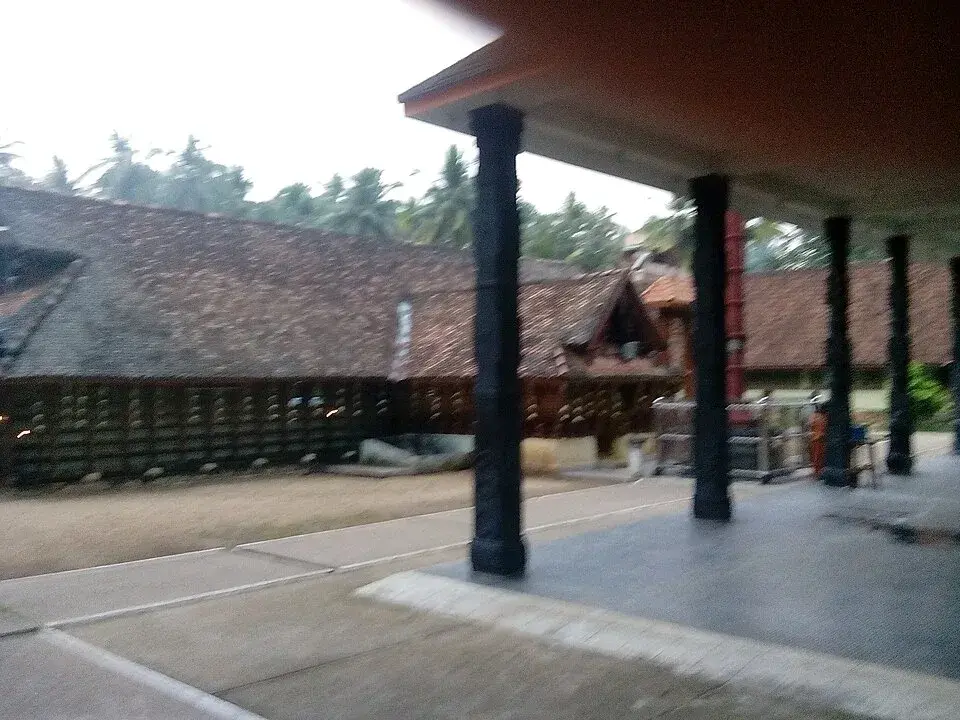 Photo: Dvellakat · CC BY-SA 4.0