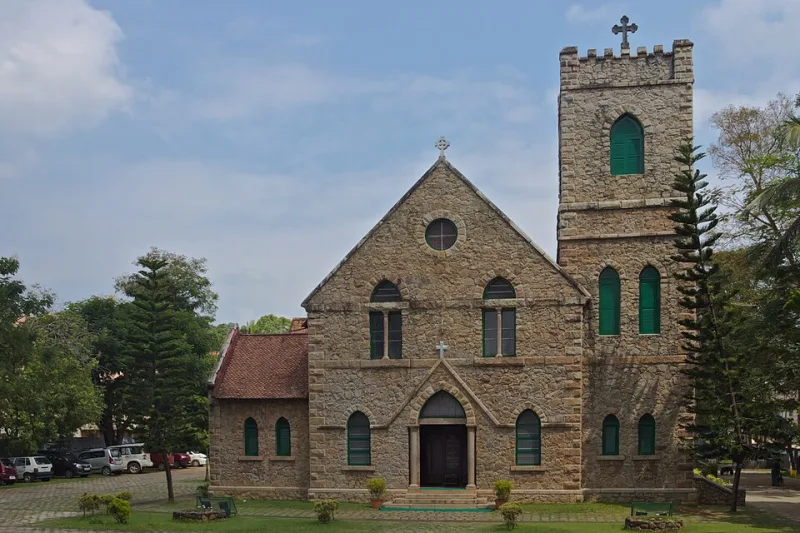
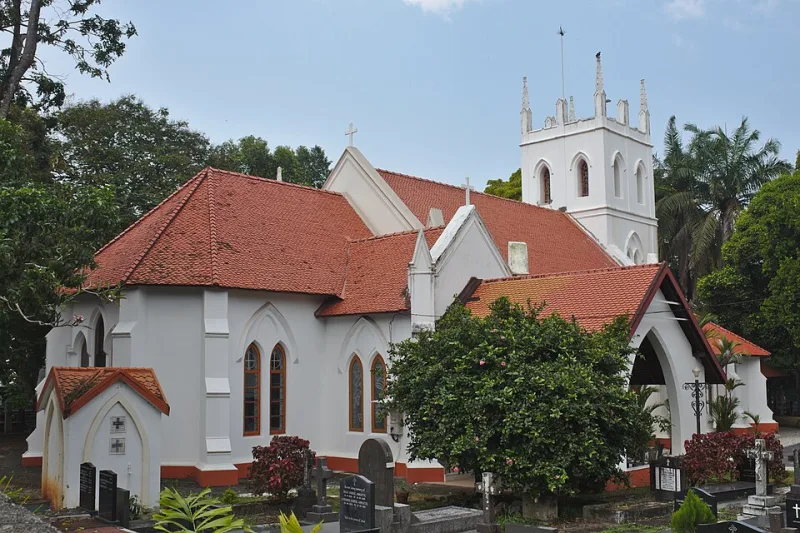
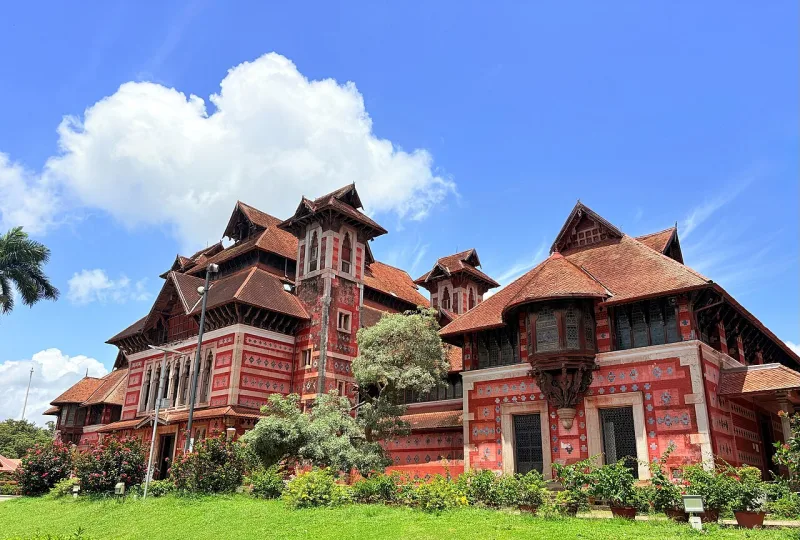
About St. Mary's Cathedral, Pattom
The central church of the Syro-Malankara Catholic Church, consecrated in 1965 and visited by Pope John Paul II in 1986.
At a glance
What: The chief cathedral of an eastern Catholic church with roots in the Syriac Christian tradition of Kerala.
Where: Pattom, a northern quarter of Thiruvananthapuram.
When: Foundation stone laid in 1950; consecrated on 22 February 1965.
How: A short bus or autorickshaw ride from Palayam.
By whom: Begun by Archbishop Geevarghese Mar Ivanios and consecrated by Archbishop Benedict Mar Gregorios.
For whom: Members of the church, pilgrims and visitors interested in eastern Christian traditions.
About the cathedral
St Mary's at Pattom is the central place of worship of the Syro-Malankara Catholic Church and the seat of its Major Archbishop. That title belongs to the head of an eastern church that governs itself while remaining in full communion with the Pope. For members from Kerala and far beyond, Pattom is therefore a mother church, associated with the founders and leaders whose tombs it shelters.
The campus around it includes church institutions, and the surrounding neighbourhood is known for schools and offices. The cathedral, renovated in 2008 and blessed anew on 8 November of that year, serves a parish of several hundred families besides its wider role.
History
The Christians of St Thomas in Kerala trace their faith to the apostle, whom tradition brings to this coast in the first century. Over many centuries their community, long linked with eastern Syriac churches, passed through Portuguese control, revolt and division, producing several branches with different allegiances. In the twentieth century a movement led by Geevarghese Mar Ivanios, a bishop of the Malankara tradition and founder of the Bethany religious order, sought communion with Rome while keeping the ancestral liturgy. The reunion took place in 1930, and it is from that event that the Syro-Malankara Catholic Church takes its modern form.
Mar Ivanios laid the foundation stone of this cathedral in 1950. He did not see it finished. His successor, Archbishop Benedict Mar Gregorios, consecrated it on 22 February 1965. On 8 February 1986 Pope John Paul II visited the cathedral during his tour of India, an occasion that members still recall.
The tombs
Three leaders rest here. Archbishop Mar Ivanios, who has been declared Venerable, a stage in the Catholic process towards recognition as a saint, is the focus of particular devotion. Archbishop Benedict Mar Gregorios, long his successor, and the Major Archbishop and Catholicos Cyril Baselios are also entombed. Visitors pause in prayer, light candles where permitted and recall their service to education and social work. The annual remembrance of Mar Ivanios in July brings walking pilgrims from many places to this church.
The liturgy
The Syro-Malankara Church worships in the West Syriac, or Antiochene, tradition, adapted into Malayalam and other languages. Visitors used to Roman rite churches notice differences: a curtain that may be drawn before the sanctuary, generous use of incense, chanted responses between priest and people, the clashing of small bells on liturgical fans, and the exchange of peace passed by touching hands from one person to the next. Many melodies have been handed down for centuries. The long fasts before Christmas and Easter are important in family life.
Stories of the community
Believers tell of Mar Ivanios as a scholar who gave up comfort for a life of prayer in a forest ashram on the bank of the Pampa, taking vows of simplicity, and of the hardships that he and the first companions met after the reunion, when property, friendships and security were lost. These accounts are central to the identity of the church. Reports of favours received through prayer at his tomb are shared by devotees; the Church examines such claims by its own procedures, and personal testimonies should not be taken as medical proof.
Misunderstandings and facts
People sometimes think the word Syrian means that the congregation comes from Syria. It refers to the Syriac language and liturgical heritage; members are Indians. Others assume that this church is the same as the Orthodox or Jacobite churches, whose worship looks similar. They are separate bodies with distinct authority, though they share much history. It is also distinct from the Syro-Malabar Church, which follows the East Syriac tradition, and from the Latin Catholic cathedral at Palayam.
Service beyond the sanctuary
The leaders remembered at Pattom are associated with the founding of schools and colleges, including the Mar Ivanios College in the city, as well as hospitals, hostels and homes for people in need. For many residents of Thiruvananthapuram who are not members of the church, these institutions are their main acquaintance with it. Students who walk past the cathedral before examinations, and families who studied in its schools over two or three generations, add their own layer of memory to the place.
What to notice
Look for the arrangement of the sanctuary, raised and set apart, the images and symbols connected with Mary, and the inscriptions at the memorials. The Syriac cross, often shown with budding ends, appears in Kerala Christian art as a sign of life springing from the crucifixion. If you attend a service, notice how the whole assembly sings the responses without needing prompting.
A pilgrim's walk
In the days before the July remembrance, groups set out on foot from dioceses and parishes far from the capital, resting at churches along the way and singing as they go. Arriving together at Pattom is the climax of the journey, and the surrounding roads see special arrangements for the crowds.
Visiting
Dress modestly, remove footwear if the custom indicated at the door requires it, and keep silence, especially near the tombs. Women of the community often cover their heads in church, and visitors may do likewise. Check the timetable if you wish to attend a service, which can last longer than visitors expect. Ask before photographing, and never during the central prayers without permission.
Forty five minutes to an hour allows time for the church and the memorials.
Questions visitors ask
Can non Catholics visit? Yes, with respect for the customs. Is communion open to all? It follows church rules; visitors may remain seated or stand as others do. Is it far from the museum area? Only a few kilometres, though office hour traffic can slow the journey.
Around Pattom
The Queen of Peace Basilica and the other churches and shrines at Palayam, the Napier Museum, Kanakakkunnu grounds and the Kerala Science and Technology Museum are all within a short drive, giving a rounded view of the city's learning and worship.
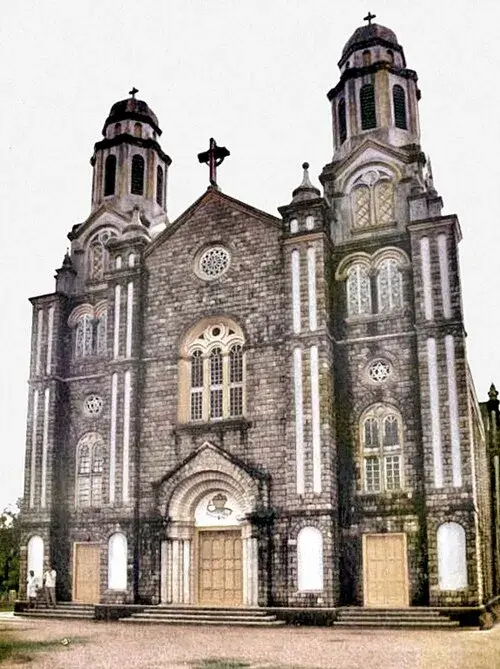 Photo: Photograph: Kumbalam Derivative work MagentaGreen · CC0