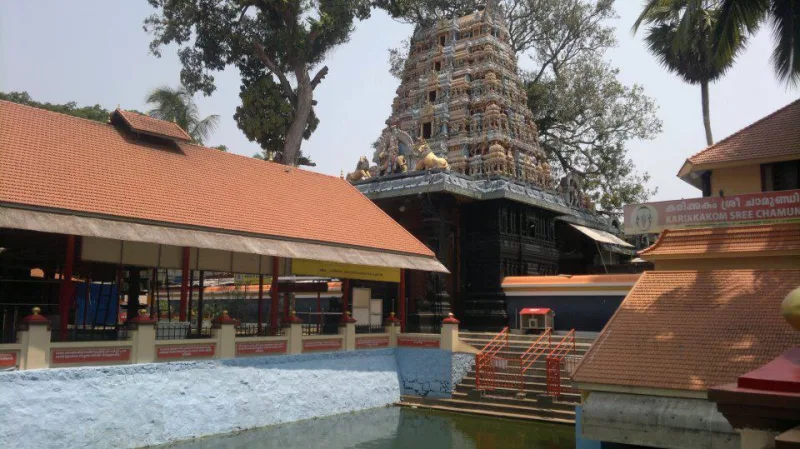
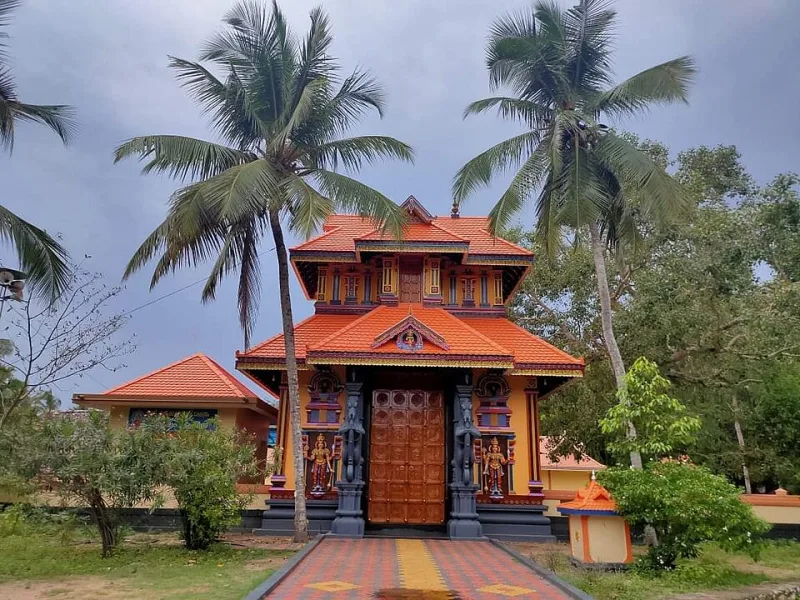
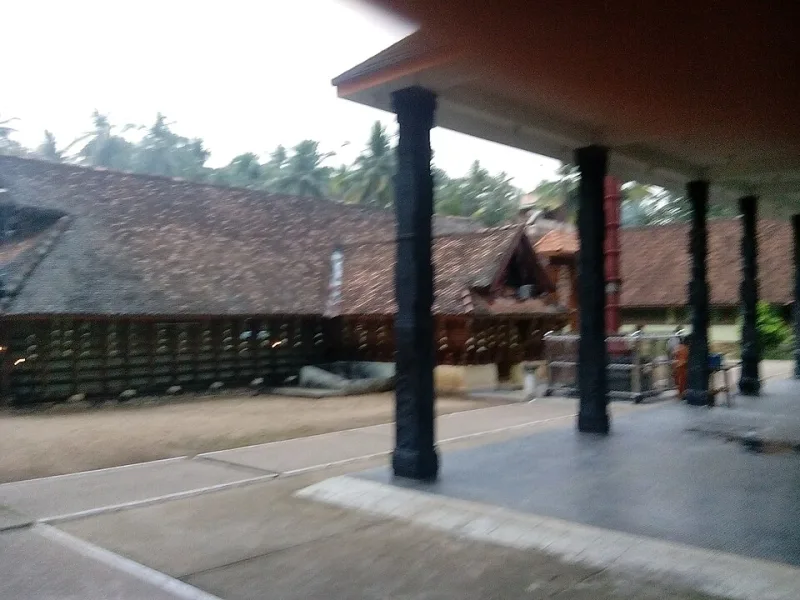
A Shiva temple at Kulathoor consecrated by Sree Narayana Guru, who ended animal sacrifice at the earlier goddess shrine on the spot.
At a glance
What: A temple of Shiva established by a social reformer.
Where: Kulathoor, on the north-western side of Thiruvananthapuram.
When: Daily worship; the consecration is dated to the month of Meenam in the Kollam year 1068, about 1893.
How: By road from Kazhakkoottam, Ulloor or Veli.
By whom: Temple management associated with the local community.
For whom: Devotees, followers of Narayana Guru and students of Kerala's reform movement.
Why it matters
Kolathukara is more than a neighbourhood shrine. It belongs to the chain of temples that Sree Narayana Guru consecrated to open dignified worship to people who were then kept out of many temples because of caste. Visiting it connects ordinary devotion with one of the most important social changes in modern Kerala.
Before the change
The site had been a shrine of Bhadrakali where animals were sacrificed. The Guru ended the practice, removed the earlier installation and consecrated an image of Shiva. He preferred forms of worship marked by cleanliness, study and restraint, and discouraged the killing of animals and the use of liquor in religious observance.
The date
One account places the consecration on the thirteenth day of Meenam in the Kollam year 1068, which corresponds to about March 1893. Another website gives 1915, but it appears less dependable. The earlier date fits the period when the Guru was establishing a series of shrines after his first consecration at Aruvippuram.
Aruvippuram
In 1888 Narayana Guru took a stone from the Neyyar at Aruvippuram and consecrated it as Shiva. When it was objected that a man of his community had no right to do so, he is remembered as replying that he had installed an Ezhava Shiva and not a Brahmin one. The answer, sharp and gentle at once, has become part of Kerala's memory.
The Guru
Narayana Guru was born near Chempazhanthy, close to the city, in the 1850s and died at Sivagiri in Varkala in 1928. He was a scholar of Sanskrit, Tamil and Malayalam, a poet and a teacher of non-dual philosophy. His best known saying calls for one caste, one religion and one God for humankind.
A hymn for this place
He composed the Kolathireshastavam, a hymn in praise of the Mahadeva of Kolathukara. His devotional poems join intense feeling with philosophical depth. Reciting or reading this hymn at the temple is a way devotees keep the founder's presence alive, and printed copies are worth asking about.
Education
A school is said to have been started on the temple compound by the Guru's initiative. This was typical of his approach: temples as centres of cleanliness, learning and organisation. His advice to become free through education and strong through organisation shaped associations, libraries and schools across the region.
The wider movement
The Sree Narayana Dharma Paripalana Yogam, founded in 1903 with the poet Kumaran Asan as its first secretary, grew out of this current. Together with other reformers and later agitations such as the Vaikom Satyagraha of 1924, it helped bring about the Temple Entry Proclamation of 1936, which opened state-run temples of Travancore to all Hindus.
Worship today
The temple follows the usual forms of Shiva worship: abhishekam, lamps, bilva offerings, archana and the observance of Pradosham and Shivaratri. Remembrance days connected with the Guru, including his birth and passing anniversaries in August or September, are commonly marked at institutions linked with him with prayer and public events.
Shivaratri
The great night is observed with fasting and vigil. At temples of the Guru's tradition, reading from his works and discussion often accompany ritual. Confirm the programme locally. Visitors may find this blend of devotion and reflection a distinctive way of keeping the festival.
Development works
In 2017 the state announced civil works for the temple under a pilgrim and heritage tourism circuit. The present condition of those works was not verified for this page. Such circuits aim to link places associated with the Guru so that travellers can follow his life across the district.
A circuit to follow
A natural route runs from Chempazhanthy, the Guru's birthplace, to Aruvippuram, Kolathukara and finally Sivagiri at Varkala, where his samadhi stands. Spread over one or two days, it gives a clear picture of a life and of the society it changed.
Names and communities
Accounts of this history mention caste because the exclusion was real and the reform answered it. Visitors should speak of these matters with care. The point of the temple, in the Guru's spirit, is that worship and learning belong to everyone.
Visiting with respect
Observe the dress and conduct rules displayed at the temple, leave footwear outside and keep silence. Ask before photographing portraits, inscriptions or rituals. Show the same courtesy at any attached school or office.
Getting there
Kulathoor is reached from Kazhakkoottam or from the Ulloor and Akkulam side of the city. Kazhakkoottam and Kochuveli are convenient railway points, and the airport is not far. Buses and autorickshaws serve the area.
When to come
Morning and evening openings are best. Shivaratri and the Guru's commemoration days show the community at its fullest. The cool months suit a longer circuit.
Nearby places
Chempazhanthy Gurukulam, the Kazhakkoottam Mahadeva temple, Veli's lagoon, Akkulam lake and the science museum around Thumba can be added.
Facilities
City-edge facilities are plentiful. There is no entry charge.
Why the Guru built temples
Narayana Guru did not found shrines merely to add to their number. He wanted places that were open, clean and orderly, where people long humiliated could stand with self-respect. Later he advised that the building of temples give way to the building of schools. Seen in that light, Kolathukara is a step in an education of society as well as a place of prayer.
Talking with local people
Older residents may have heard from parents and grandparents how the change at the shrine was received, who supported it and what difficulties followed. Listen with courtesy, distinguish family memory from documented fact and ask permission before quoting anyone. Such voices keep the history human and prevent it from shrinking to a date on a signboard.
For young visitors
Students can learn much here. Ask them why anyone should have been refused entry to a temple, how a consecration could answer that refusal without violence, and what the Guru meant by linking worship with learning. Reading one short poem of the Guru before the visit gives the discussion a good start.
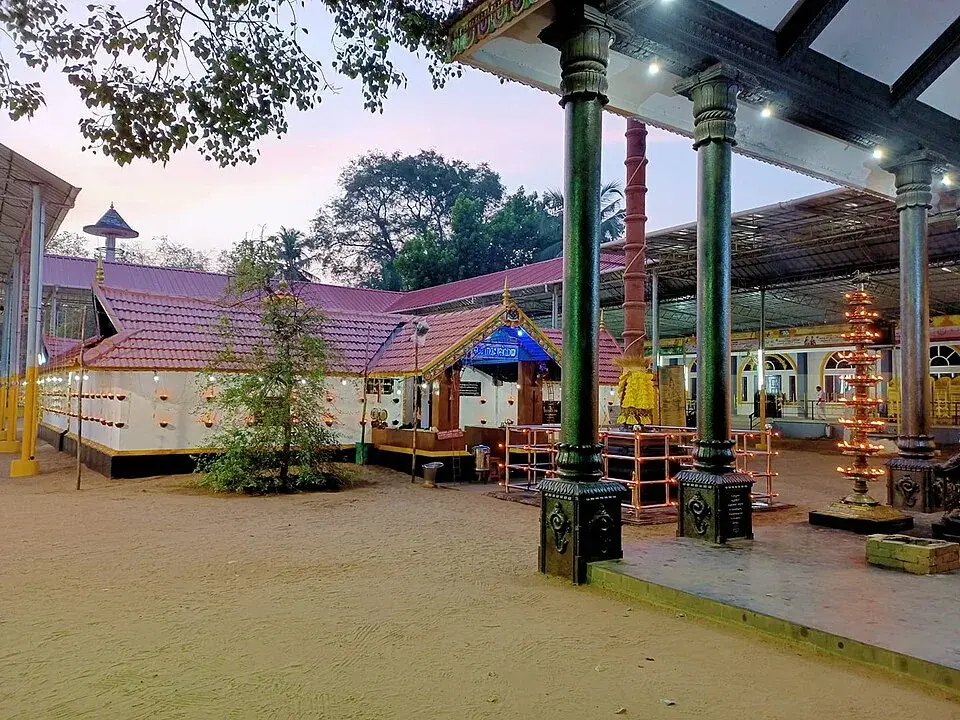 Photo: Rahulinchempazhanthy · CC BY-SA 4.0