The traditional family palace where the painter Raja Ravi Varma was born, with courtyard houses, ponds and sacred groves.
At a glance
What: A historic residential palace complex linked with art and politics of old Travancore.
Where: Kilimanoor, in the north of Thiruvananthapuram district.
When: The royal house has a history of more than 300 years, with some older buildings.
How: Travel by bus or car along the Main Central Road.
By whom: Home of a family of Koil Thampurans related to the Travancore royal house.
For whom: Admirers of Ravi Varma, students of architecture and history; access depends on the residents.
About the palace
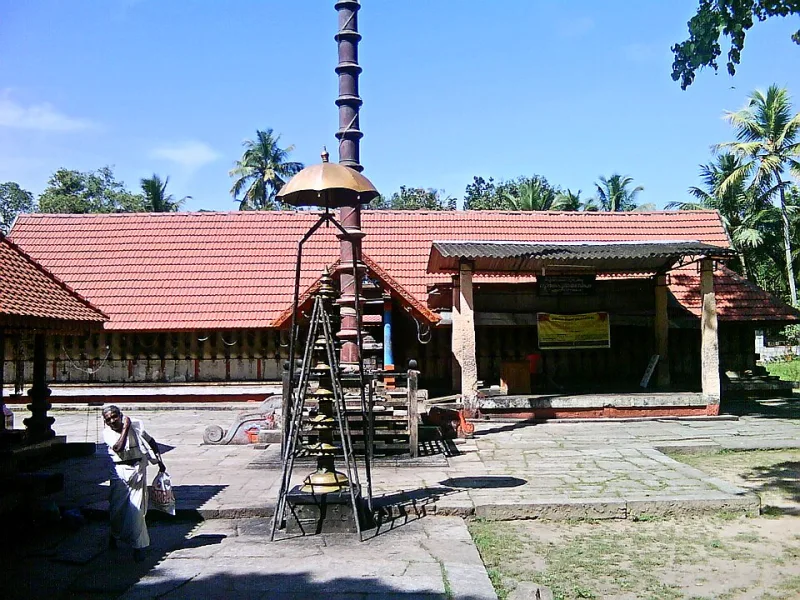
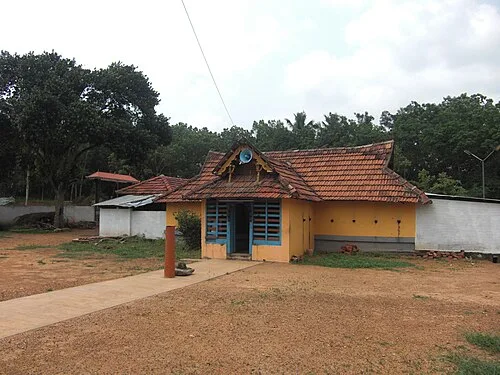
Spread over more than six hectares, Kilimanoor Palace is less a single mansion than a settlement. Courtyard houses of the nalukettu type, larger and smaller buildings, three ponds, wells and sacred groves, called kaavu, lie within it. Laterite, timber and tile are the materials of this architecture, which opens inward to light and rain through central courtyards and shelters its rooms under deep roofs. Families connected with the Travancore royal house continue to live here, which is the first fact a visitor should keep in mind.
History
In 1705 the son and two daughters of Ittammar Raja of Beypore Thattari Kovilakam, a northern branch of the Parappanad royal house, were adopted into the royal house of Venad. The Raja's sister and her sons, Rama Varma and Raghava Varma, settled at Kilimanoor, and the brothers married the adopted princesses. The surrounding lands had belonged to a local chief of the Pillai title and consisted of several villages, which passed to the family of Raghava Varma.
Raghava Varma was the father of Marthanda Varma, the ruler who forged the kingdom of Travancore in the eighteenth century. Family and local history records that around 1739 and 1740 an alliance led by a Dutch officer, joined by rulers hostile to Marthanda Varma, moved against Venad, and that a force from Kilimanoor resisted and defeated the attackers. In 1753, in recognition, the Maharaja exempted the lands under the palace from taxes and granted them autonomous status. The war with the Dutch culminated in the celebrated Travancore victory at Colachel in 1741.
The painter of Kilimanoor
Raja Ravi Varma was born here in 1848. As a boy he is said to have drawn on the walls with charcoal, until an uncle who painted recognised his gift and took him to the court at Thiruvananthapuram. There he watched, practised and mastered the demanding medium of oil paint. His portraits won patrons across India, and his large canvases of scenes from the epics and the Puranas, such as Shakuntala looking back for her beloved or the goddesses Lakshmi and Saraswati, combined European technique with Indian subjects.
He established a printing press near Bombay in the 1890s to produce oleographs, inexpensive colour prints. Through them his images of the gods entered homes, shops and shrines all over the country, and many people today picture their deities in forms he popularised without knowing his name. He died in 1906. Some of the buildings at Kilimanoor were built and maintained by him from the earnings of his painting. Members of the family, notably his sister Mangala Bai Thampuratti, also painted.
Stories told about him
Popular anecdotes describe the child artist decorating whitewashed walls, the young man learning by watching a visiting European painter who was reluctant to share methods, and the mature artist surrounded by costumes and models as he planned an epic scene. Biographers repeat these in various forms. His work has had both devoted admirers and sharp critics, who found it theatrical or too European, and was even the subject of legal complaint by conservatives. The debate itself shows how new his approach was.
Ponds and sacred groves
The kaavu is a patch of trees left undisturbed in honour of serpents or deities. Such groves protect springs, birds, reptiles and medicinal plants, and ecologists value them as small refuges of native vegetation. The ponds served for bathing and ritual and recharge the wells.
Claims and facts
Visitors sometimes expect a gallery of original masterpieces. The best known public collections of Ravi Varma's work are in museums such as the Sree Chitra Art Gallery in Thiruvananthapuram and the palace collections of Mysuru and Vadodara. Do not assume originals can be seen at Kilimanoor. Arrangements for access are decided by the family and may change.
What a nalukettu is
The classic Kerala house of well to do families is built as four wings around an open square courtyard, the nadumuttam. Rain falls into the centre and drains away, light enters without harsh sun and family life turns inward around the open space. Verandahs run along the sides, a granary is kept secure and prayers are offered in a dedicated room or nearby shrine. Larger properties added further blocks, bathing ghats and outhouses. At Kilimanoor this domestic pattern is multiplied across a broad estate, which helps one understand how an artist raised here might have been surrounded from childhood by performance, ritual colour, Sanskrit and Malayalam literature and the example of relatives who painted and composed.
Why the visit moves people
Many Indians first met Saraswati on her rock with a veena, or Lakshmi standing on a lotus, through prints derived from Ravi Varma's compositions. To walk past the ponds and trees of his home is to see the quiet beginning of images that travelled further than he could have imagined.
Remembering without intruding
A family home that is also a place of national memory asks something of its guests: curiosity joined to courtesy.
Visiting
Ask locally or make contact in advance before entering. Stay in permitted areas, speak softly, do not peer into homes and photograph only with consent. Leave footwear where asked, take care near the ponds and do not disturb the groves.
An hour is sufficient for a courteous visit.
Questions visitors ask
Is there an entrance ticket? No regular ticketed museum should be assumed. Is there a memorial elsewhere in town? Ask residents about cultural spaces and events held in the artist's memory, especially around his birth anniversary in April. How does one see his paintings? Begin with the gallery in the capital.
Around Kilimanoor
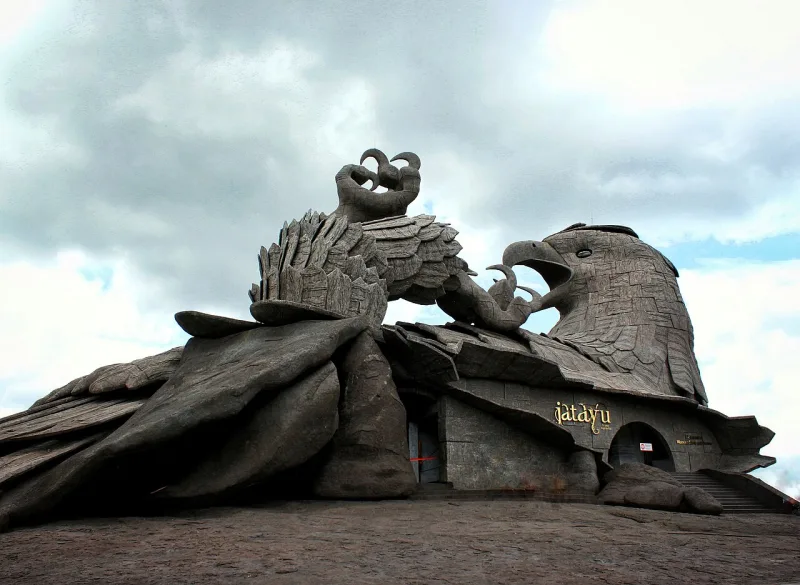
The town lies on the old trunk road, with routes to Attingal, Varkala and the Jatayu rock sculpture at Chadayamangalam in neighbouring Kollam district. Rubber holdings, paddy fields and low hills make the drive pleasant, particularly after the rains.
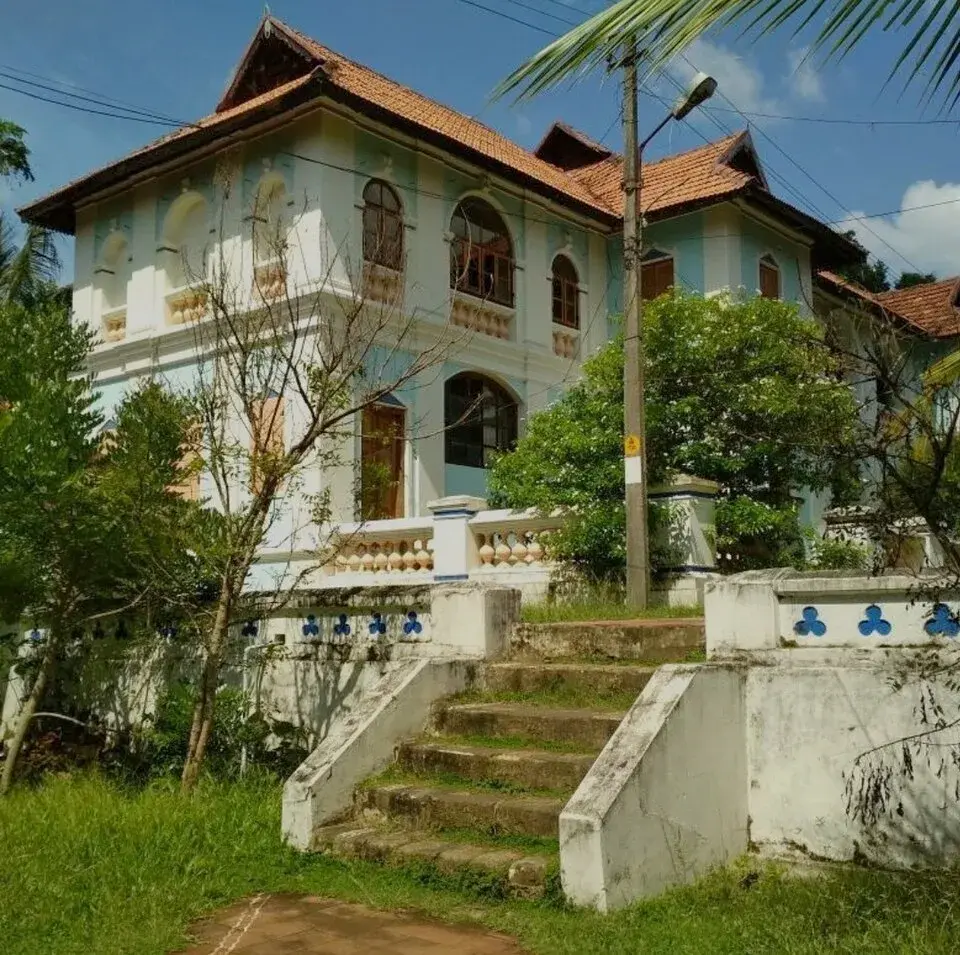 Photo: Indurema · CC BY-SA 4.0