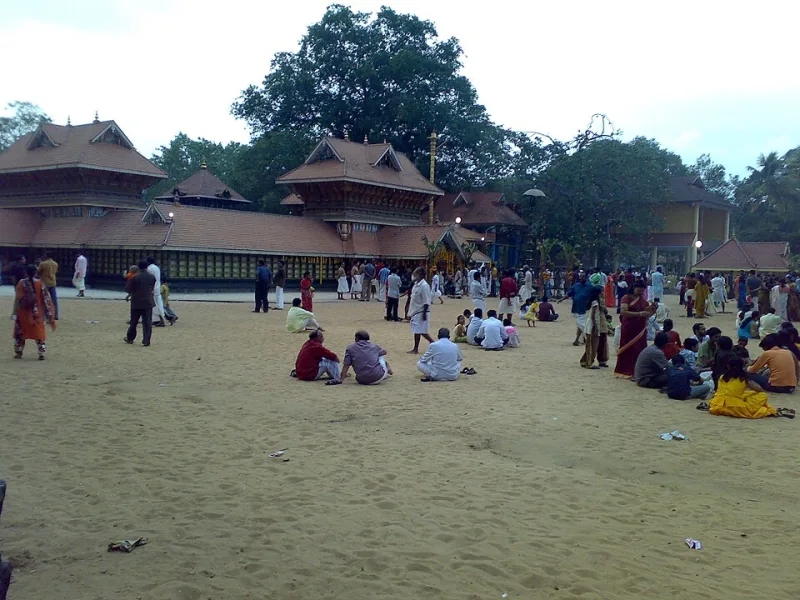
A Bhadrakali temple at Mudakkal with a four-armed black stone image, linked with a Brahmin household and the turbulent early years of Marthanda Varma.
At a glance
What: A temple of Sree Bhadrakali as Amunthirathamma.
Where: Mudakkal, in Chirayinkeezhu taluk near Attingal.
When: Daily worship; confirm timings locally.
How: By road from Attingal.
By whom: Temple management; confirm on site.
For whom: Devotees and readers of Travancore history.
The temple
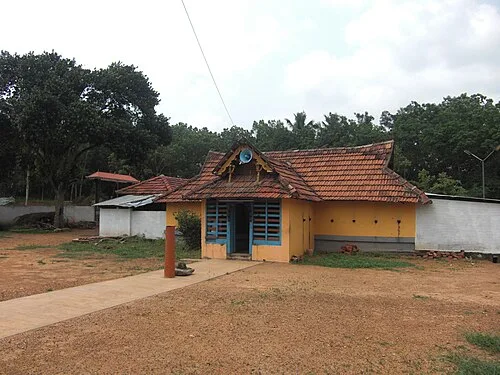
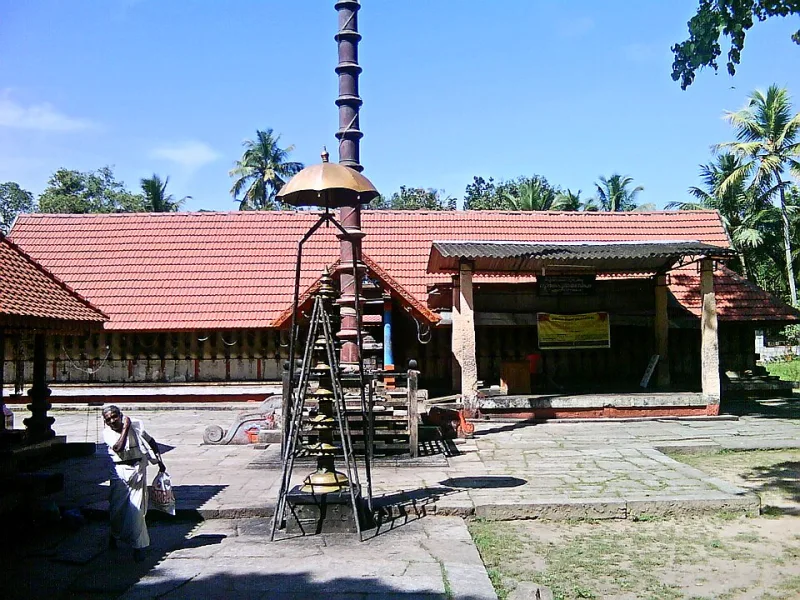
Amunthirathu Devi temple is a village shrine dedicated to Bhadrakali, known here as Amunthirathamma. Its story is bound up with a Brahmin household and with events of the early eighteenth century, when the little state that became Travancore was struggling to establish royal authority.
The image
The goddess is carved in black stone. She sits in ardha padmasana, the half-lotus posture, with eyes partly closed in an inward gaze, and has four arms. The calm, meditative bearing is striking for a deity often pictured in battle, and invites devotees to think of power held in stillness.
The household
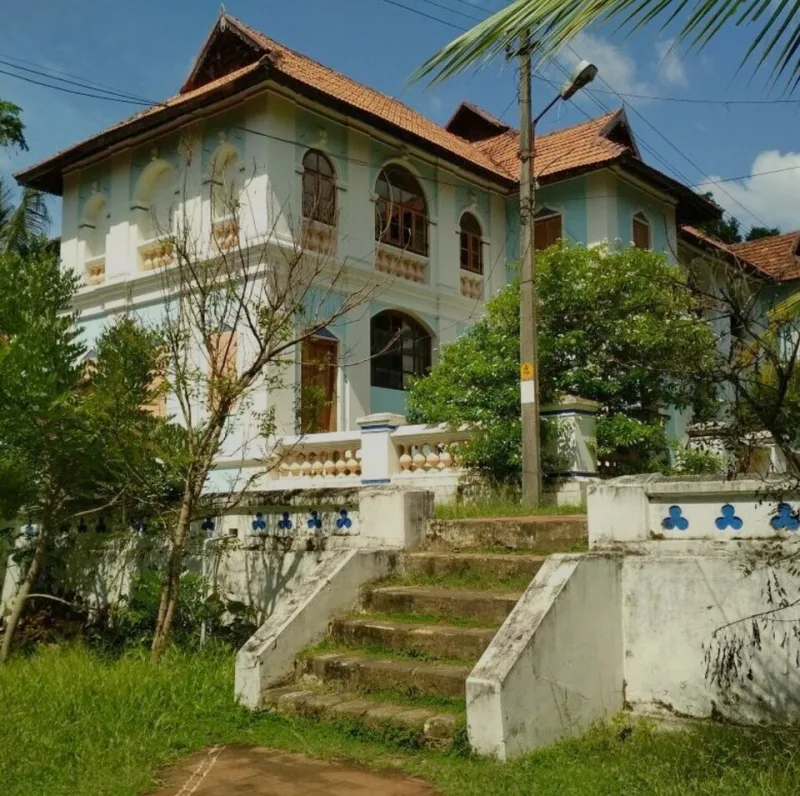
Amunthirathu madam is described as a branch of the Vanjipuzha madam, a Brahmin house of Chengannur said to have existed before the reign of Rama Varma, who ruled in the 1720s. A madam combined residence, estate and shrine. Its temple gathered around it many Nair families of standing and several other communities.
Weak kings, strong nobles
Historians describe the ruler of that time as holding limited power, hemmed in by the nobles of the eight houses, other barons and the council that managed the Padmanabhaswamy temple. Taxes, land and armed followers were divided among many hands. A prince who wished to rule in earnest faced them all.
A disputed adoption
The nobles opposed an adoption made by the ruling house in 1718. Fearing for her life, the adopted princess, a sister of Marthanda Varma, lived in exile at Harippad with her young son, who later became the celebrated Dharma Raja.
Flight to Chengannur
In 1728, according to the account, news came that the nobles had sent soldiers to kill the princess and child. She sought refuge with the Vanjipuzha chief at Chengannur. The elderly lady of her household, together with her husband, a nobleman of Kilimanoor, arranged the escort and travelled with her.
Courage remembered
Their presence of mind is credited with saving the mother and son. Rivalry among the Dutch and English traders added to the danger of the age. The story gives women a central part in preserving the royal line, which in a matrilineal family descended through them.
Marthanda Varma
Marthanda Varma became ruler in 1729 and reigned until 1758. Before overcoming the nobles he is narrated to have lived in hardship, moving between places such as Kottarakkara and Kayamkulam. He built alliances, including with the Vanjipuzha house, and eventually brought his relations back to Attingal.
Attingal and the goddess
The Attingal queendom, ancestral home of the royal women, was devoted to goddess worship. This background helps explain why shrines of the Devi in the area are associated with families that served or sheltered the royal house.
How far the link goes
The published history ties the Amunthirathu family to these events, but the details come from a single narrative that mixes documented episodes with family tradition. The broad outline of Marthanda Varma's struggle is well established; the temple's own part should be understood as its tradition.
Bhadrakali worship
Offerings to the goddess commonly include red flowers, lamps, vermilion, sweet payasam and, at festivals, Pongala. Tuesdays and Fridays and the Bharani star are favoured. Songs narrating her defeat of the demon Darika are part of the ritual culture of the region.
The four arms
In images of Kali and Durga the hands commonly hold weapons, a vessel or a skull cup, or form gestures of protection and giving. Ask the priest what the hands of this image carry, since the attributes express how the community understands her.
Festivals
An annual festival is usual, with processions and traditional arts, but its dates were not found in the sources consulted. The Malayalam months of Kumbham and Meenam, February to April, are the common season for goddess festivals. Confirm locally.
The countryside
Mudakkal lies among paddy, coconut and rubber on rising land near the Vamanapuram river system. The drive from Attingal passes village junctions, schools and small shrines. It is a landscape in which the old estates of madams and nobles once drew their income.
Reading history on the ground
Look for old wells, foundations or house names that preserve memory. Ask elders whether the family residence survives and who looks after the temple now. Record answers carefully and respect privacy where descendants prefer not to speak.
Visiting with respect
Dress modestly, remove footwear, keep silent at the sanctum and avoid photographs inside. Do not enter private residences without invitation.
Getting there
Attingal is on the highway between Thiruvananthapuram and Kollam. From its bus stand, take an autorickshaw to Mudakkal. Chirayinkeezhu is a convenient railway station. The airport is about thirty-five kilometres away.
When to come
Morning or evening worship in the cool season is ideal. Monsoon lanes can be muddy. A weekday visit allows conversation.
Nearby places
Avanavanchery Indilayappan temple, Attingal's palace precinct, Sarkara temple, Venjaramoodu and Kilimanoor Palace can be combined.
Facilities
Village shops; full services at Attingal. No entry fee applies.
Help complete this page
Festival dates, family records shared with consent and photographs are welcome through the links here.
For students
The temple makes a good starting point for a project on how families, shrines and the state were connected before modern government.
Comparing two kinds of evidence
A visitor hearing of a princess in flight can ask simple questions that historians ask: who first wrote it down, how long after the event, and what other record mentions it? Travancore's state manuals, palace records and family papers sometimes confirm, correct or enlarge such narratives. Treating the story with this curiosity does it honour and keeps it from hardening into unexamined claim.
A modest destination
Come without expectation of signboards or guides. The pleasure lies in a quiet courtyard, a dark stone image glimpsed by lamplight and the thought that a village household once played a part in the fortunes of a kingdom. Half a morning is enough for the temple and the drive.
Leaving it as found
Do not remove stones, scratch names or tie offerings to trees where this is not the custom. Small village shrines are easily damaged and slowly repaired.
A closing note
Allow extra time, since village directions are best gathered along the way from people who know the lanes.
In brief
Enjoy the visit slowly and thank those who guide you.
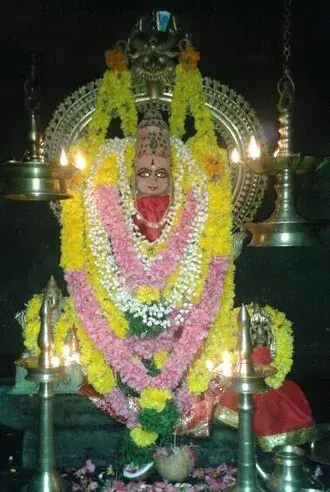 Photo: Jithuukrishnan (talk) (Uploads) · CC0