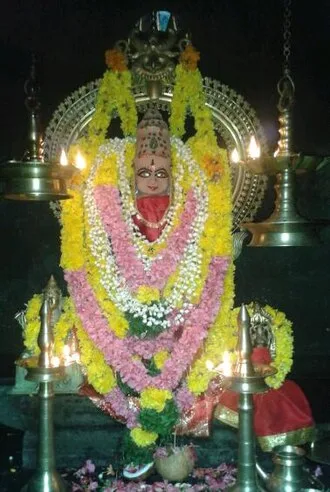
A revered Bhadrakali temple at Chirayinkeezhu, famous for the Kaliyoot ritual drama introduced by King Marthanda Varma in 1748.
At a glance
What: An important temple of Bhadrakali with a historic ritual theatre tradition.
Where: Chirayinkeezhu, between Thiruvananthapuram and Varkala.
When: Of ancient tradition; Kaliyoot has been associated with it since 1748.
How: Travel by train or road to Chirayinkeezhu.
By whom: Kaliyoot was instituted under Marthanda Varma and entrusted to the Attingal line.
For whom: Devotees, lovers of ritual arts and visitors of respectful interest.
About the temple
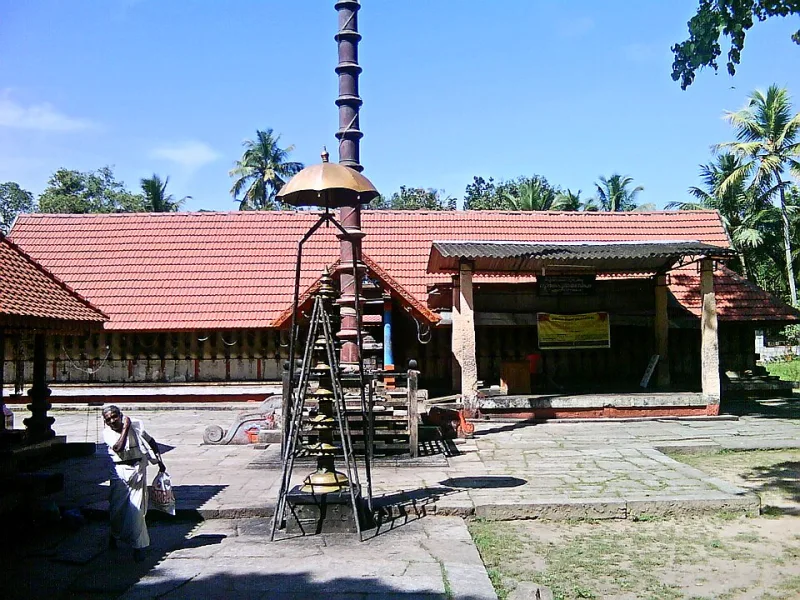
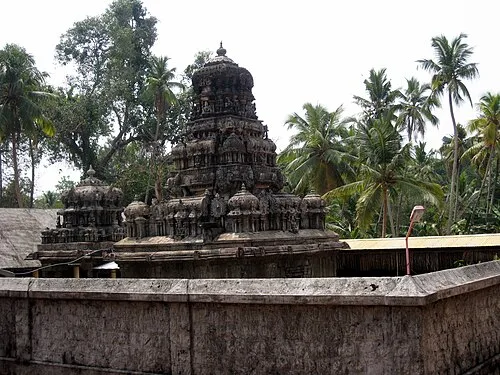
Sarkara Devi Temple is one of the best known goddess temples of southern Kerala. Tradition gives it a remote antiquity. The deity is Bhadrakali, and the broad grounds around the shrine come alive during a festival calendar that draws people from across the district. For residents of Chirayinkeezhu the temple is the centre of town life.
History
The temple's historical prominence is closely linked with Kaliyoot. In 1748 Anizham Thirunal Marthanda Varma, the energetic ruler who built modern Travancore, introduced the festival here. Chirayinkeezhu belonged to the sphere of Attingal, a small principality whose senior princesses, the Ranis of Attingal, held remarkable independent rights from the days of the Venad kings. Their line was related to the Travancore family through adoption from the royal house of Kolathunad in the north.
Marthanda Varma annexed Attingal soon after taking the throne and sought direct control, yet the Ranis retained a special position. He gave them the responsibility of conducting Kaliyoot, while the expenses came from the royal treasury. The work of performing and arranging it passed to a family of warriors and scholars. The arrangement shows how a ritual could be used to bind political relationships while honouring older rights.
Kaliyoot, the drama of the goddess
Kaliyoot means the feeding or offering to Kali. It enacts the story of the battle between Bhadrakali and the demon Darika over a series of days, in a form combining ritual, dance, music, dialogue and humour. Early episodes introduce characters and messengers, comic scenes involve the people of the village, and the tension builds as the goddess searches for her enemy. The final day, with an elaborate encounter on specially raised structures, ends in the victory of the goddess and the restoration of order.
Performers prepare through vows and observances, wearing striking painted faces and heavy headgear. The audience does not simply watch a play; many regard the performer in costume as carrying the presence of the deity.
The myth behind it
According to the legend, Darika obtained a boon that protected him from gods and men, and grew proud and cruel. Shiva produced from his anger a goddess able to overcome him. After a long struggle she cut off his head. Variants of this story underlie several ritual arts of Kerala, including mudiyettu and paranettu, each with its own style.
Beliefs and facts
Many families make vows to the goddess for health and the welfare of children, and offer them during the festival. Such offerings express trust and gratitude. Talk of miraculous happenings accompanies most great festivals; it should be received as testimony and not as proof. The dates of Kaliyoot and other observances are fixed by the temple calendar and announced yearly, so do not rely on last year's information.
How a performance unfolds
Visitors who arrive for a single evening may wonder what they are seeing. Kaliyoot is serial storytelling. Each night advances the tale a little and each has its own named episode. There are preliminary rites in which the performers receive permission, scenes where a character carries news or searches the land, comic exchanges that comment on village life, and processions in which the goddess seeks her enemy in the four directions. Spectators who attend regularly know what is coming and respond with practised delight.
The painted faces use strong colours and raised patterns, built up patiently over hours. Costumes with broad skirts, ornaments and tall headgear change the performer's way of standing and moving. Drums control the pace, quickening as conflict nears. Much of the knowledge involved is held by families and passed from elder to learner through practice, which makes continuity a matter of real effort.
Related ritual arts
Across central and southern Kerala, the defeat of Darika is retold in several forms. Mudiyettu, performed mainly in central districts, was inscribed by UNESCO in 2010 on its list of the intangible cultural heritage of humanity. Paranettu and the southern forms of Kali performance have their own costumes and rules. Seeing more than one shows how a single myth takes local shape.
Chirayinkeezhu and its coast
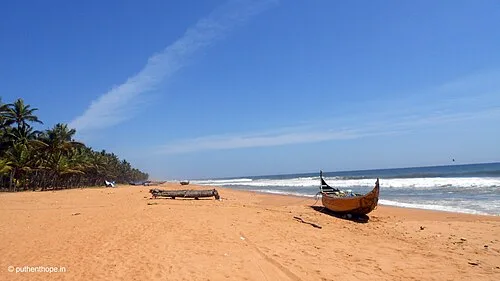
The town lies in a landscape of backwaters, paddy and coir working villages close to the Vamanapuram river. Legend explains the name through the episode in the Ramayana in which the great bird Jatayu, who tried to stop the abduction of Sita, lost a wing, since chirak can mean wing in Malayalam; such explanations are popular tradition and not established history.
Questions visitors ask
Is Kaliyoot held on the same dates each year? No, it follows the Malayalam calendar, usually falling in the early part of the year, so confirm with the temple. Is a ticket needed? Public viewing is generally open, though arrangements can change. Where should one stay? Varkala and Thiruvananthapuram both offer many choices within easy travel.
Why it still matters
In an age of screens, an entire town returning night after night to follow one story is remarkable. The ritual supports drummers, painters, costume makers and elders who remember the order of events, and it gives children an early acquaintance with classical rhythm and old forms of speech. Support from respectful audiences is one of the surest ways such knowledge survives.
Visiting
Wear modest clothing, leave footwear outside, keep phones silent near the shrine and ask before photographing performers, particularly while they are in a ritual state. During performances, sit or stand where organisers indicate, never walk across the performance area and watch children near lamps and torches. Evenings can be long; carry water and arrange transport home.
On ordinary days one to two hours is sufficient, and the temple is calm in the morning.
Around Sarkara
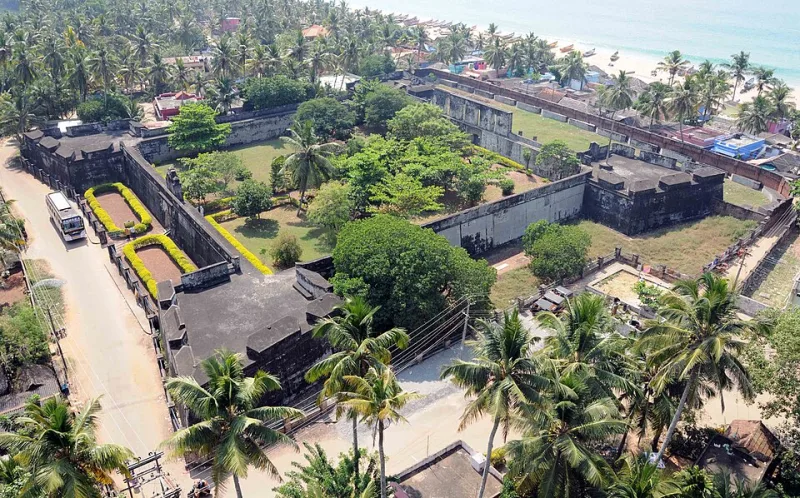
Chirayinkeezhu was the home area of the film actor Prem Nazir and is near Perumathura beach, the Anchuthengu fort and lighthouse, the Kaikkara memorial to the poet Kumaran Asan and the Attingal palace area. Varkala with its cliff, temple and Sivagiri lies a short journey north.
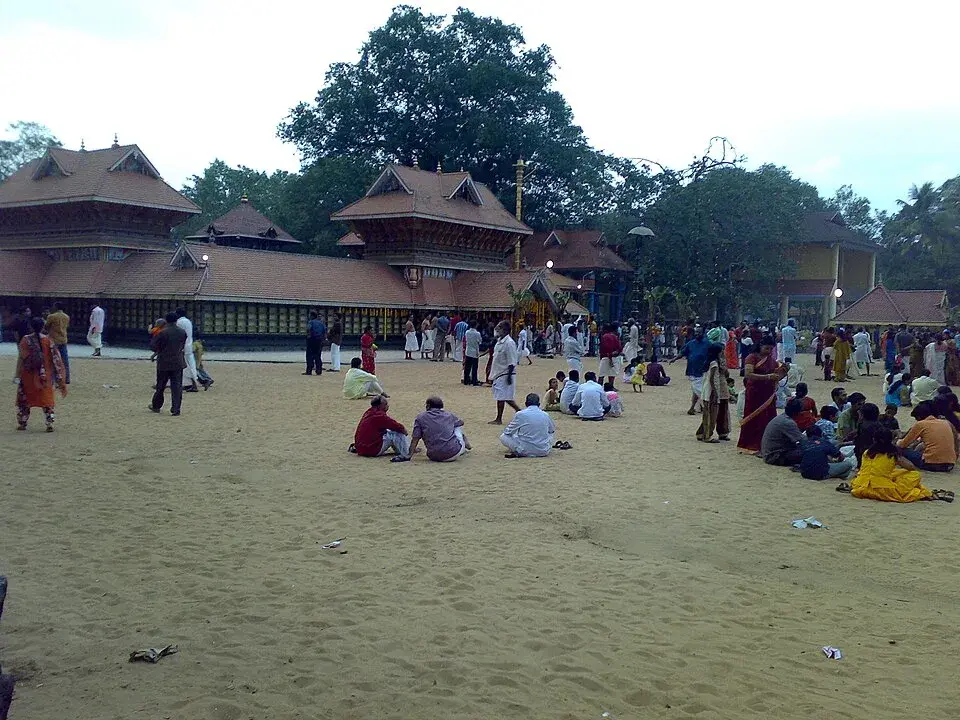 Photo: Binoyjsdk · CC BY-SA 3.0