A memorial and underground museum in Chanakyapuri honouring police personnel who died on duty, with a granite sculpture and a Wall of Valour.
Police officers rarely receive national monuments, yet many have died protecting the public, guarding borders and responding to violence and disasters. The National Police Memorial in Chanakyapuri, opened on Police Commemoration Day, 21 October 2018, remembers those who lost their lives in the line of duty since Independence, drawn from state police forces and central police organisations.
The date has a history. On 21 October 1959 members of the Central Reserve Police Force patrolling at Hot Springs in Ladakh were ambushed by Chinese troops, and ten of them were killed. The day has been observed ever since as a time to honour police martyrs, and the annual ceremony at the memorial is its national focus.
The site covers a little over six acres. At its centre stands a sculpture of black granite about thirty feet high and weighing well over two hundred tonnes, representing the strength and sacrifice of the forces. A river like water element and landscaped space around it provide calm. Along one side runs the Wall of Valour, on which are inscribed the names of more than thirty four thousand personnel. The number itself is a striking fact for many visitors. New names are added as time passes.
Below ground lies the museum, described as the first police museum of its kind in the country. Its galleries trace more than two thousand years of policing, beginning with ideas of law and order found in ancient texts such as the Arthashastra of Kautilya's time, passing through medieval and colonial arrangements and arriving at the modern forces. Exhibits include uniforms, badges, weapons, communication equipment, photographs and accounts of notable operations, along with displays on the different central organisations and their work, from border guarding to disaster response.
The museum is useful for children, who can learn what various uniforms and units do, and for anyone curious about the institutions that shape public safety. Staff may be able to answer questions, and a short film or audiovisual presentation is sometimes available.
Entry has generally been free, but opening hours, the weekly holiday and arrangements for guided visits should be confirmed in advance. On weekends, police bands or ceremonial changing of the guard may be performed at certain times of year; ask at the gate. Visitors undergo security screening, and photography rules should be followed. The diplomatic neighbourhood is strictly policed, so use proper parking and avoid wandering with cameras near embassies.
Observe the memorial's purpose. Remain quiet beside the wall, do not climb on the sculpture and give priority to families who come to remember a relative. Outdoor surfaces become very hot in summer, so carry water, while the museum below offers a cooler interval. Ramps and lifts aid access.
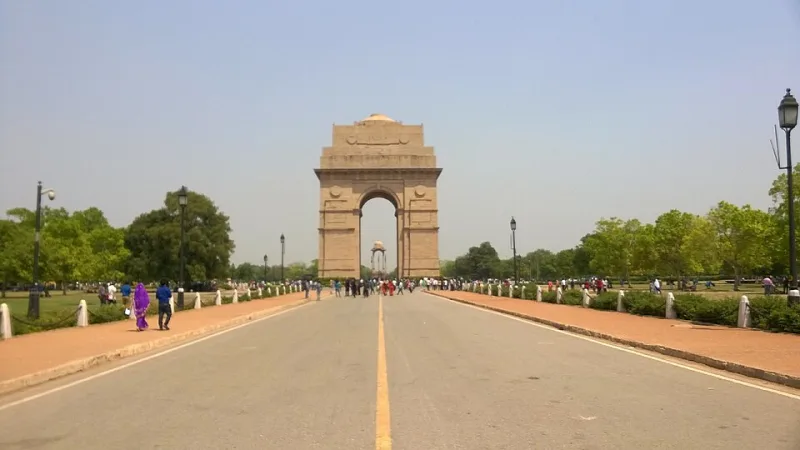
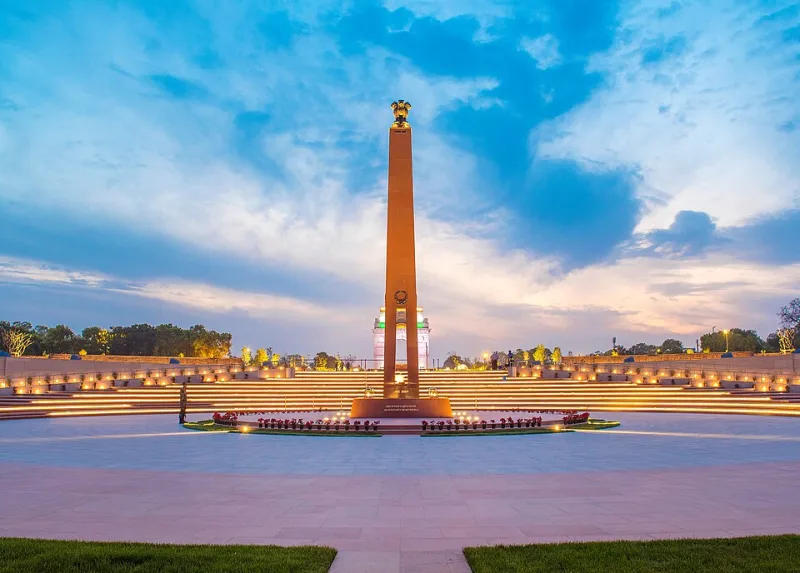
The location suits a half day circuit. The National Rail Museum is close by, with its locomotives and miniature train. Nehru Park provides shade, Dilli Haat further south offers crafts and regional food, and the Pradhanmantri Sangrahalaya is only a short distance north. The National War Memorial at India Gate makes a natural companion visit, one remembering the armed forces and the other the police.
October to March is the most pleasant period. If you are in Delhi around 21 October, check whether public access is affected by official ceremonies. At other times the grounds are usually peaceful, allowing a reflective hour that gives faces and stories to a service that most people encounter only in passing on the street. Taking a moment to read some names is a simple way of paying respect.
Teachers can use the visit to talk about everyday public safety, such as road rules and emergency numbers, alongside the stories of courage. Pause at the exhibits on disaster response, which show a side of uniformed work that many visitors have never considered.
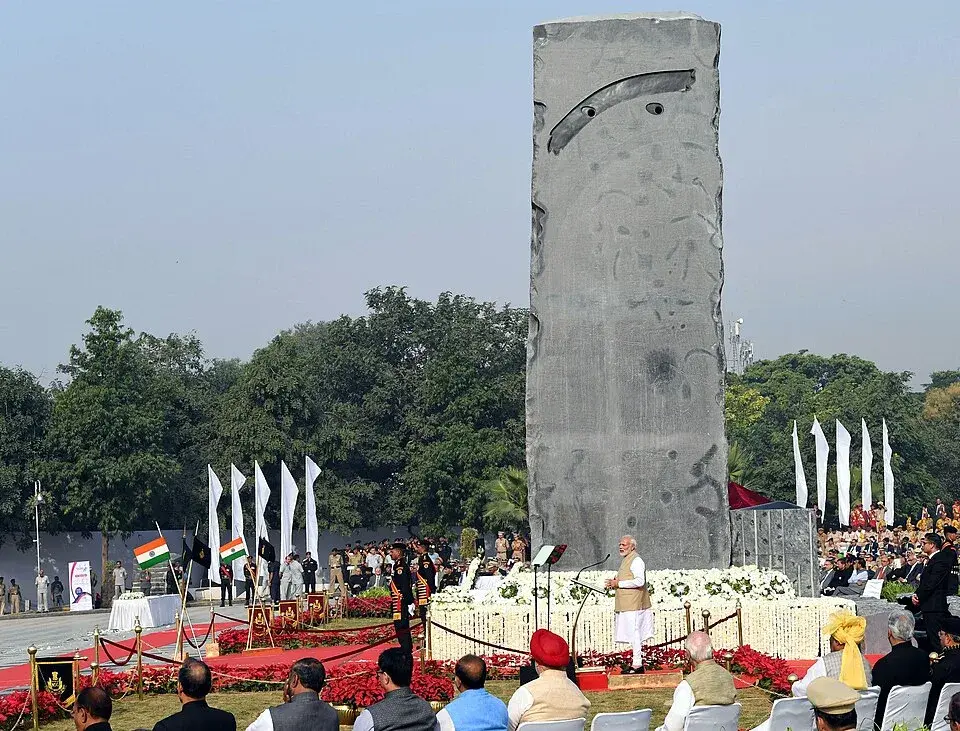 Photo: Prime Minister's Office · GODL-India