A monumental domed hospital built by the last Nizam, one of India's oldest, admired from outside as a landmark of early twentieth century Hyderabad.
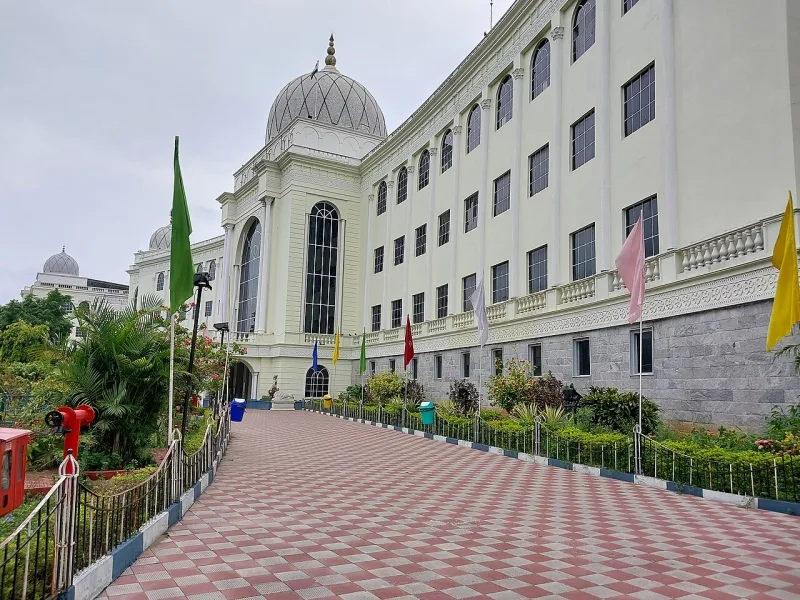
Few hospitals look as stately as this. With broad domes, minaret like turrets and long arcades, the heritage block of Osmania General Hospital at Afzal Gunj is a landmark on the banks of the Musi and a reminder that public buildings in old Hyderabad were meant to impress as well as to serve.
The institution is named after its founder, Mir Osman Ali Khan, the seventh Nizam. It grew from an earlier hospital on the site that suffered in the great flood of 1908. The new building, completed in the 1920s at a very large cost for the time, was among the biggest and best equipped hospitals in the region. It is one of the oldest hospitals in India that continues to give its name to a major government medical service.
The design follows the Indo-Saracenic manner favoured by the state. A symmetrical composition with high ceilings, wide corridors and many openings allowed light and air to circulate, a matter of real importance for patients before air conditioning. Stone and lime construction, decorative arches and domes gave civic grandeur. The grounds also contain old trees, including one remembered because people climbed it to save themselves during the 1908 flood, according to the well known account.
In recent decades the structure fell into serious disrepair. Leaks, cracks and overcrowding made parts unsafe, and a long public debate followed about whether to restore the heritage block or replace it, involving doctors, conservationists, the government and the courts. Plans for new hospital facilities elsewhere have also been pursued. The situation continues to evolve, so what you see, and which sections are in use or closed, may have changed.
Above all this is a place where sick people receive treatment, many of them from families with limited means. Sightseers should be unobtrusive. View the architecture from the road, the bridges or other public places. Do not enter wards or corridors, never photograph patients, relatives or staff and keep ambulance routes completely clear. Follow security instructions.
A quarter of an hour is enough for the exterior. The view from across the Musi is the most complete, especially in morning light. Avoid peak traffic if possible. Because the surrounding area is busy and not designed for tourists, travel by autorickshaw or metro and watch your belongings.
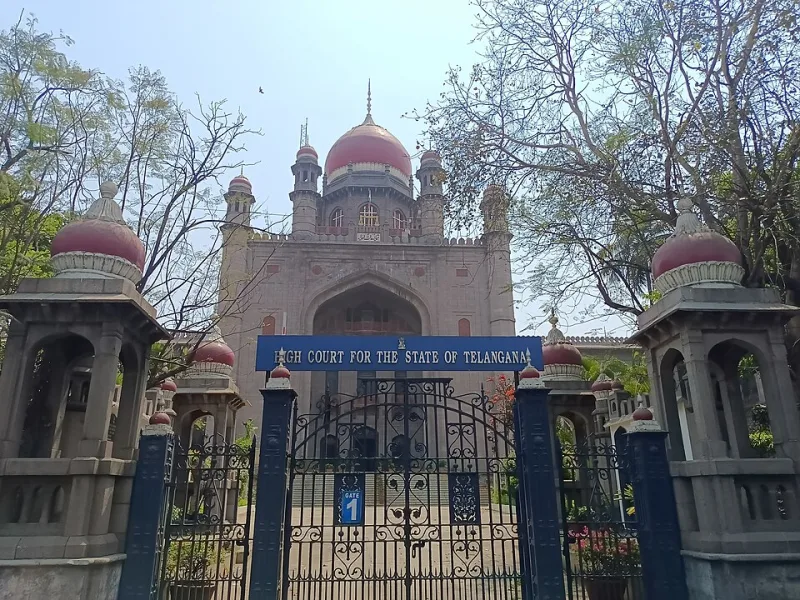
The building is best appreciated as part of the riverfront group created in the reconstruction era. The High Court stands close by to the south west, City College lies along the same bank, and the State Central Library faces the river nearby. A heritage walk linking these structures explains how engineers and architects responded to disaster with flood defences, drainage, new housing and grand institutions.
Visitors interested in medical history may also enjoy a visit to the Sir Ronald Ross Institute in Begumpet, which marks the research on malaria carried out in Secunderabad. Together the two sites show the city's connection with health and science.
November to February provides the most pleasant weather. The riverside can be uncomfortable in summer heat, and heavy rain may cause waterlogging in the lanes.
Osmania Hospital poses a question that many old cities face: how can a historic structure keep serving modern needs, and what should happen when it no longer can? Looking up at the domes, you see both architectural pride and the wear of constant use. Whatever its future, the building has been part of countless lives, of births, recoveries and losses, and it merits a respectful glance from anyone exploring the heart of Hyderabad. Check recent news before expecting to see it unchanged.
Photographers should remember that privacy matters more than any picture. Frame the domes from a distance, keep people out of close view and put the camera away if a guard or family member objects.
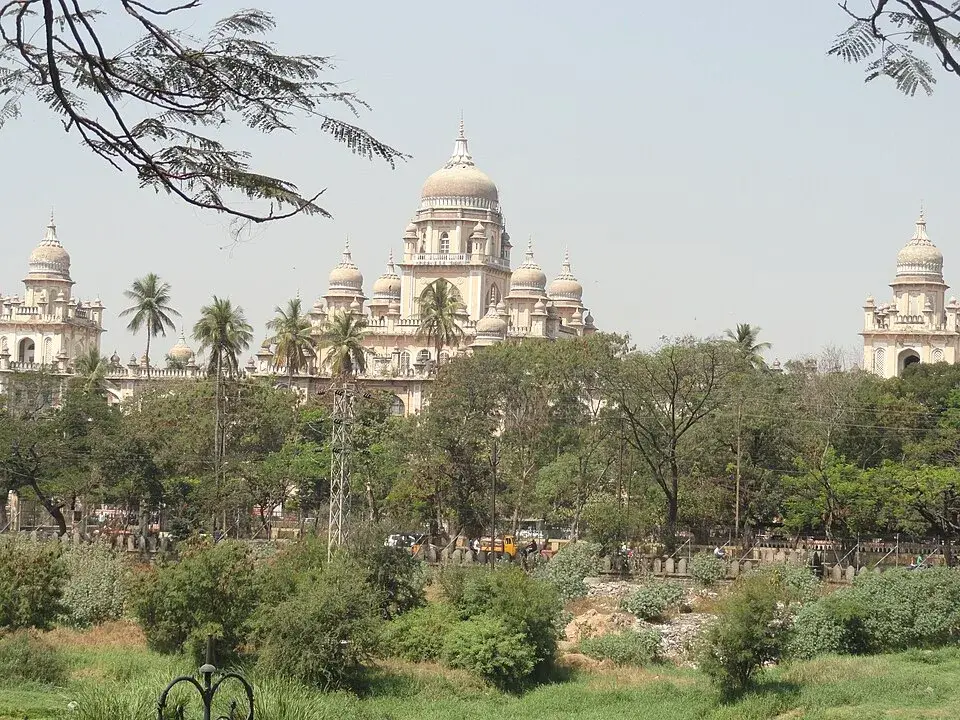 Photo: Bhaskaranaidu · CC BY-SA 3.0