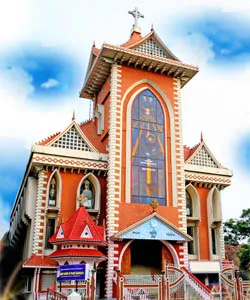
About St. George Orthodox Cathedral, Thiruvananthapuram
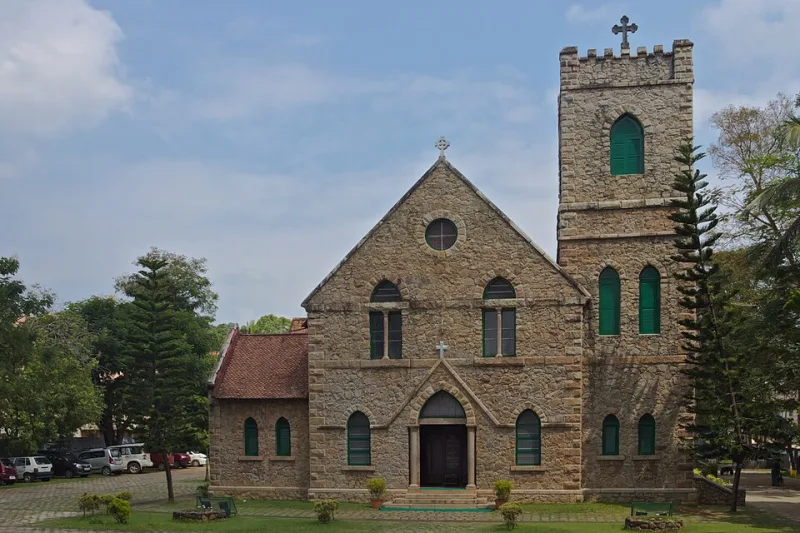
A Malankara Orthodox cathedral on MG Road, traced by its own account to a church begun in 1890 by two brothers.
At a glance
What: A cathedral of the Malankara Orthodox Syrian Church.
Where: MG Road at Spencer Junction, in central Thiruvananthapuram.
When: Open for worship through the year; Saint George is commemorated in late April and early May.
How: On foot, by city bus or by autorickshaw along MG Road.
By whom: The Malankara Orthodox Syrian Church.
For whom: Orthodox faithful, devotees of Saint George and visitors exploring the city's religious heritage.
The cathedral
Standing on the capital's best known street, the cathedral is a central place of worship for Orthodox Christians who live and work in Thiruvananthapuram. Many have family roots in central Travancore, where the church is strongest, and came to the city for government service, education and the professions.
Its beginning
The cathedral's own account traces the church to 1890, when two brothers undertook its construction. Building is said to have taken about two years. Larger works and changes followed as the congregation grew. As the story rests mainly on the parish's tradition, readers wanting exact particulars should consult the cathedral's records.
The Malankara Orthodox Church
This church is an independent, self-governing member of the Oriental Orthodox family, which also includes the Armenian, Coptic, Ethiopian, Eritrean and Syriac churches. Its head, the Catholicos, has his seat at Devalokam in Kottayam. It follows the West Syriac liturgy, now celebrated mostly in Malayalam, with English used in many places abroad.
Roots and divisions
Kerala's Saint Thomas Christians were once one community. Contacts with Portuguese authority led to the Coonan Cross Oath of 1653 and to later divisions into Catholic, Orthodox, Jacobite, Marthoma and other branches. Disputes over church property between some of these bodies have continued into modern times. A visitor needs only to know that the labels matter to those who bear them.
Saint George
George, honoured in Kerala as Geevarghese Sahada, is believed to have been a soldier of the Roman empire put to death for his faith around the year 303. His historical life is hardly known, but devotion to him is among the oldest in Christendom. In art he is usually shown on horseback, spearing a dragon.
The dragon legend
The story of the dragon appeared centuries after the saint's death and spread through medieval Europe and the East. In Kerala, popular belief makes George a protector against snakes, and people have long invoked him when serpents threatened. This is devotional tradition. Snake bite requires immediate hospital treatment with antivenom.
The feast
Orthodox and other Saint Thomas Christians keep the saint's commemoration with special services, intercessory prayer and often a procession and a shared meal. Famous celebrations at some central Kerala churches fall in early May. The programme at this cathedral should be checked with the parish office for the current year.
Worship
The Holy Qurbana is the main service, sung with incense and responses, and with a curtain that opens and closes before the sanctuary. Evening and morning prayers, the Lenten services and the Passion Week observances have a long and solemn character. Services can run for a couple of hours or more.
Cross and symbols
Look for the Orthodox crosses with budding ends, the lamps, and the raised sanctuary called the madbaha. These elements express ideas of life springing from the cross and of heaven brought near in worship. Church staff or parishioners are often glad to explain them after the service.
The setting on MG Road
Spencer Junction takes its name from an old trading firm familiar to many Indian cities. The surrounding stretch links the Secretariat, Palayam and the university area, and holds within a short walk a mosque, a Hindu temple and several churches. Palayam is often cited as a picture of the city's mixed religious life.
Visiting with respect
Remove footwear before entering, as is usual in Orthodox churches in Kerala. Wear modest clothing, and keep to the nave. Men and women often stand on separate sides. Take pictures only with permission and never during the consecration. Holy Communion is for members prepared according to church rules.
Getting there
Thiruvananthapuram Central station and the Thampanoor bus station are about two kilometres to the south. Buses run constantly along MG Road. The city airport is a short drive away. Traffic is heavy and parking scarce near the junction, particularly on working days and during demonstrations near the Secretariat.
Nearby places
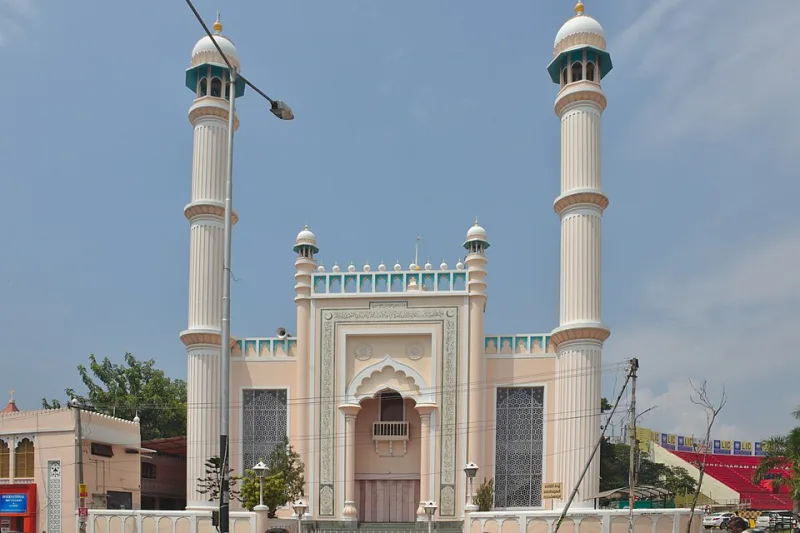
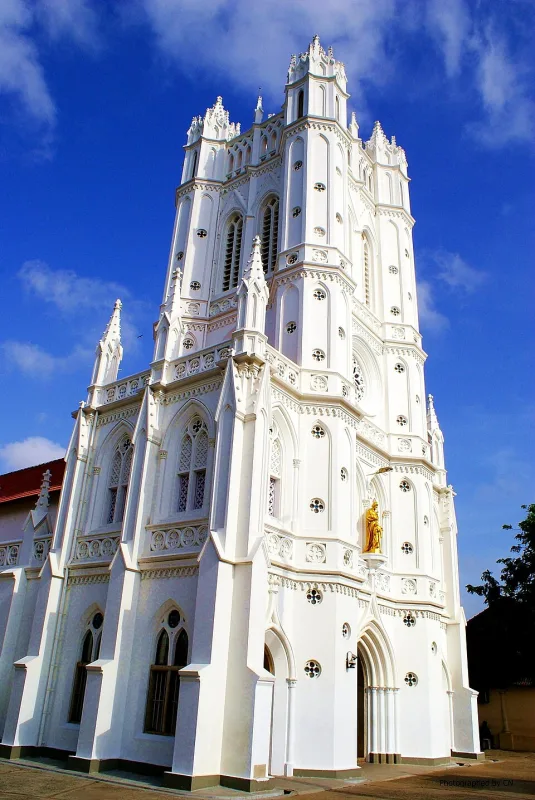
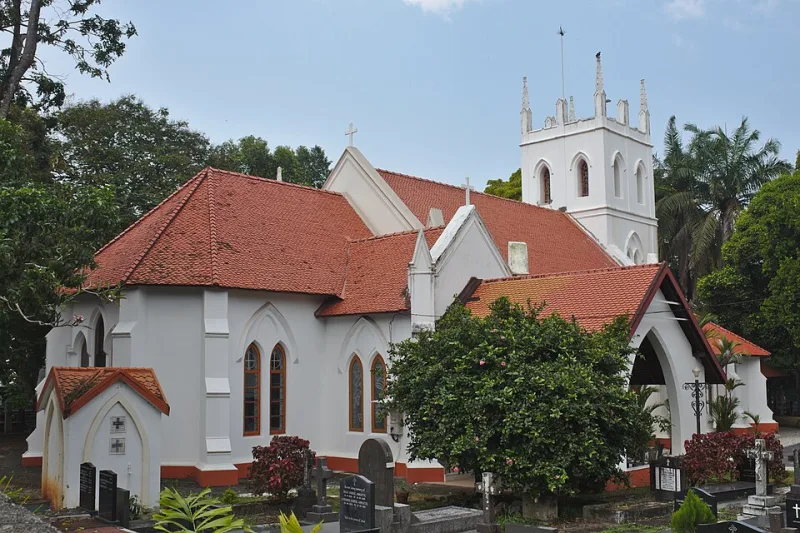
The Palayam Juma Masjid, Palayam Ganapathy temple, the Latin cathedral of Saint Joseph, CSI Christ Church, the Connemara Market and the University Library are all close. A little farther north are the Napier Museum, the zoo and the legislative complex.
When to come
Weekday late mornings are usually calm. Sundays show the parish in full, and the week before Easter is especially moving. The saint's days in April and May come at the hottest time, so carry water. November to February is the most comfortable season for walking.
Facilities
Everything a city centre offers is at hand, including restaurants, banks, pharmacies, shops and public toilets in commercial buildings. Visiting is free, and offerings can be made at the church counter or box.
Help complete this page
Parishioners may send corrections, the names and dates behind the foundation story, and photographs. These will be reviewed before they are shown.
Orthodox lamps and offerings
Kerala Orthodox churches usually keep a standing lamp and candle stands where people pray privately before or after services. Offerings may be made in money, candles or oil. Parishioners commonly bow toward the sanctuary and kiss the priest's hand cross in greeting. Visitors are not expected to copy these gestures, but should observe them with respect.
A century of change
When the first walls went up, MG Road was a quiet avenue of a royal capital, travelled by carriages and bullock carts. Today buses, office workers and processions pass the gate at every hour. The cathedral has remained a place of stillness within that change, and its growth mirrors the movement of families from central Kerala into the city across the twentieth century.
Practical courtesy
Large services, weddings and memorial prayers may be in progress when you arrive. Wait outside or stand at the back, and ask a volunteer where visitors should be. A quiet word is always better than assumption.
Before you leave
Pause outside to take in how the cathedral sits among offices and shops. A few quiet minutes here, between the traffic of MG Road and the calm of the nave, show why city worshippers value having their church within reach of the working day.