A Sastha temple in the Thycaud quarter of the city, more than three hundred years old and administered by the Nair Service Society.
At a glance
What: A temple of Dharma Sastha.
Where: Thycaud, in the centre of Thiruvananthapuram.
When: Daily worship; busiest in the Mandala season and on Saturdays.
How: On foot or by autorickshaw from Thampanoor.
By whom: The Nair Service Society.
For whom: City devotees, Sabarimala pilgrims and passing travellers.
The temple
Thycaud's Sastha temple is a compact city shrine with a long memory. Published information states that it is more than three hundred years old. It stands in a quarter of schools, government offices and old residences, where its bell and lamps mark the hours for neighbours and commuters alike.
Three centuries
A date three hundred years back reaches to the early eighteenth century, when Marthanda Varma was building up the Travancore state and the centre of power was shifting toward Thiruvananthapuram. No founding record is quoted, so the figure should be treated as approximate. Still, it suggests a shrine older than most of the city's public buildings.
The Nair Service Society
Founded in 1914 under the leadership of Mannathu Padmanabhan, the Nair Service Society is a community organisation that runs schools, colleges, hospitals and many temples. Local units, called karayogams, often care for neighbourhood shrines. Under such management, committees arrange worship, repairs, festivals and charitable activity.
Dharma Sastha
Sastha is honoured as protector of righteousness. In popular belief he is identified with Ayyappa of Sabarimala, born of Shiva and of Vishnu's enchantress form, and so bridging the two great streams of devotion. He is shown seated in a characteristic posture, with a band supporting his raised knees.
The yogic posture
That seated pose, with legs drawn up and tied by a cloth band, is a posture of steady meditation. The raised right hand shows the gesture of knowledge, thumb and forefinger joined. Devotees read in it the teaching of self-control that lies at the heart of the pilgrimage vow.
The vow
Pilgrims to Sabarimala keep forty-one days of simplicity: early baths, plain vegetarian food, abstinence from intoxicants, restraint in speech and conduct, and daily prayer. They wear a bead garland given by a priest or senior pilgrim. The point of the discipline is to recognise the divine in oneself and in others.
Irumudi
Before setting out, a pilgrim fills the irumudi, a cloth bundle in two compartments, one for offerings and one for travel needs, with a coconut full of ghee among the contents. The ceremony, called kettunira, is often performed at a neighbourhood Sastha temple, with family and friends calling on the Lord together.
Evening songs
In the season, groups gather after dusk to sing bhajans, ending with the lullaby Harivarasanam, the song with which the Sabarimala sanctum is closed at night. Hearing it in a small city temple, with traffic fading, is a memorable experience for visitors.
Offerings
Common offerings to Sastha are neeranjanam, a lamp of sesame oil lit in a split coconut; ghee abhishekam; appam and aravana, a dark sweet pudding; and archana. Neeranjanam is especially chosen on Saturdays by those praying for relief from difficulties linked to Saturn.
Neeranjanam explained
The coconut is broken, its halves filled with sesame oil and a small cloth bundle of sesame seed, and lit before the deity. The flame is allowed to burn out. It is understood as offering one's troubles to be consumed. Do not move or extinguish another person's lamp.
Thycaud
The name is familiar for its old open ground, hospitals and teacher training institutions. In the nineteenth century the quarter was home to Thycaud Ayyaguru, a spiritual teacher and government servant counted among the guides of Narayana Guru and Chattampi Swamikal. His memorial is nearby, adding a further layer to the locality's religious history.
Reform in the neighbourhood
Ayyaguru taught people across caste lines and is remembered for communal meals that disregarded the rules of the day. Visitors interested in Kerala's social history may like to see his memorial after the temple. It is a separate institution with its own hours and customs.
City worship
A downtown temple serves quick visits: a student before an examination, a clerk before work, a pilgrim between buses. Keep this in mind and do not occupy the doorway. Those with time can sit at the side and watch the steady, undramatic devotion of a weekday.
Festivals
Besides the Mandala observances and Makaravilakku in January, an annual temple festival is usual at shrines of this kind. Dates are fixed by the Malayalam calendar. The notice board or committee office will have the current programme.
What is not recorded
The available account is very brief. It gives the deity, the place, the age and the management. It does not describe the architecture, attendant shrines or legends. Readers with knowledge of these are invited to add them with their source.
Visiting with respect
Wear modest traditional dress, take off footwear, silence your phone and refrain from photographing inside. Walk clockwise. In the vow season, give way courteously to pilgrims carrying their bundles, and avoid touching them.
Getting there
Thiruvananthapuram Central station and the Thampanoor bus stand are about a kilometre away. City buses run through Thycaud toward Vazhuthacaud. The airport is within six or seven kilometres. Autorickshaws are the easiest.
When to come
Dawn and dusk are best. The weeks from mid-November to mid-January are the most atmospheric. In summer the paving is hot at midday, when the temple is likely to be closed in any case.
Nearby places
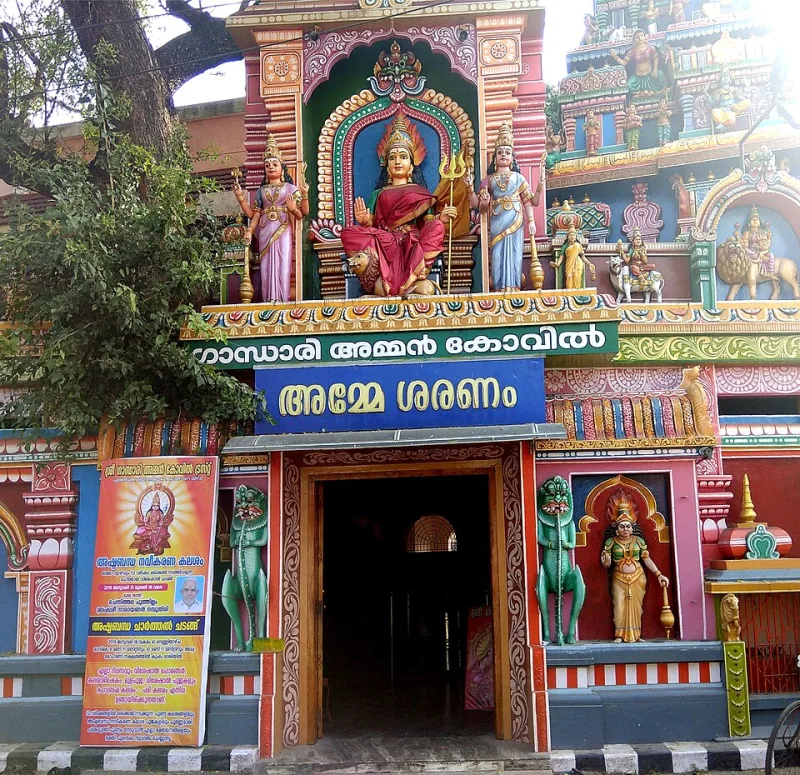
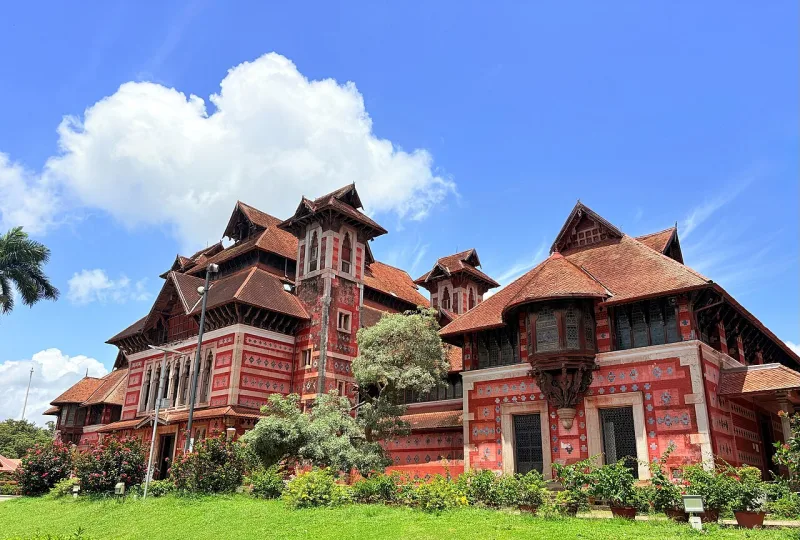
Gandhari Amman Kovil, Pazhavangadi Ganapathi temple, the Ayyaguru memorial, the Napier Museum and Sree Padmanabhaswamy temple are within easy reach.
Facilities
All city amenities are at hand. There is no entry fee; offerings are paid at the counter.
Help complete this page
Send darshan hours, festival dates, history and photographs through the links on this page.
A walking round
The old centre of the capital is compact enough for a devotional walk. Starting here in the cool of the morning, a visitor can go on to the Ganapathi temple at Pazhavangadi, the great temple at East Fort and smaller shrines in the lanes between. Wear footwear that is easy to remove, carry a cloth bag for it where temples allow, and give yourself time at each door without turning the walk into a race.
A last courtesy
Step aside for elderly devotees on the threshold, and leave the lane clear for ambulances heading to the hospitals nearby.
In passing
Even a minute at the door is a welcome visit.