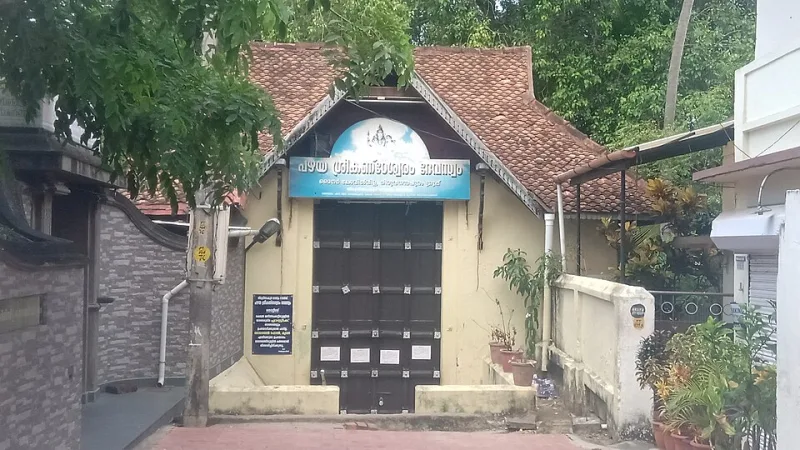
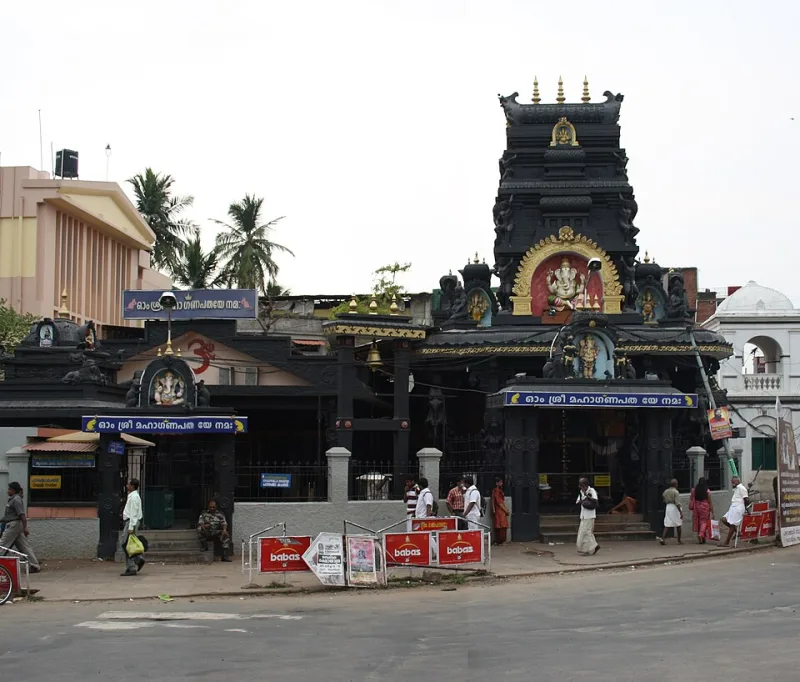
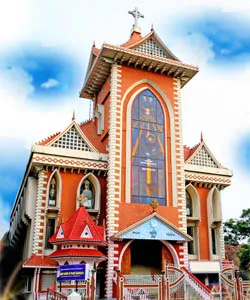
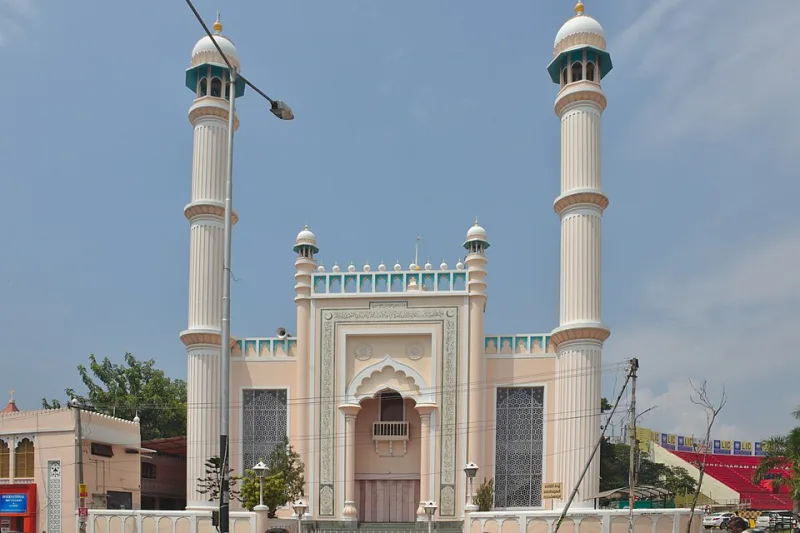
A Tamil-style goddess temple at Mele Thampanoor, with several attendant shrines and its chief festival at Chithira full moon.
At a glance
What: A Hindu temple of the goddess Gandhari Amman.
Where: Mele Thampanoor on Santhi Nagar Road.
When: Daily worship; Chitra Pournami is the main festival.
How: On foot or by autorickshaw from Central station.
By whom: Temple management and the worshipping community.
For whom: City residents, travellers waiting between trains and devotees of the goddess.
The temple
Close to the busiest transport hub of the state capital stands a kovil, the Tamil word for temple, dedicated to Gandhari Amman. Its name, the form of its worship and its festival connect it with Tamil religious culture, which has been part of Thiruvananthapuram's life for centuries.
Who is Gandhari Amman?
Amman means mother and is the common southern title of a protective goddess. The name Gandhari will remind many of the queen in the Mahabharata who blindfolded herself to share her husband's blindness. A temple name alone does not show that the goddess worshipped is that queen, and the sources consulted do not explain the identification. Ask at the temple.
The queen of the epic
In the epic, Gandhari is the mother of the hundred Kauravas, a woman of great austerity and moral force who warned her sons against injustice. After the war her grief and anger are among the most powerful passages of the poem. Popular religion in parts of India honours several epic women as embodiments of strength.
Other shrines
The complex has small shrines of Ganesha, Murugan, the serpent deities, Bhairava, the nine planets and Manthramoorthy. This array is characteristic of southern goddess temples, where a fierce guardian stands near the mother and planetary deities receive offerings from those passing through difficult periods.
Bhairava
Bhairava is a stern form of Shiva who guards sacred places. He is often shown with a dog as companion. Worshippers approach him for courage and protection, commonly with lamps. In temple custom he may receive attention at the close of the day, as the watchman to whom the premises are entrusted.
The nine planets
The navagrahas are the sun, the moon, Mars, Mercury, Jupiter, Venus, Saturn and the two lunar nodes, Rahu and Ketu. Devotees walk around them, offering lamps or coloured cloth according to astrological advice. It is a devotional custom; astrology is a matter of belief and not a science that predicts events.
Manthramoorthy
Manthramoorthy is a guardian deity venerated in many southern Kerala and Tamil shrines. Local forms of worship and stories about him differ from place to place. He stands for the old layer of protective powers that communities honoured in their own manner before and alongside the larger Hindu pantheon.
Chitra Pournami
The chief festival is Chitra Pournami, the full moon of the Tamil month of Chithirai, falling in April or May. Southern temples observe it with abhishekam, milk pot processions, decorations and shared food. In the tradition of Chitragupta, the divine record keeper, some devotees also pray on this day for forgiveness of faults.
Milk pots and vows
At many Amman temples devotees carry pots of milk on their heads in procession and pour it over the image. Vows are made for health, marriage, children or work, and fulfilled when prayers are answered. Such processions are noisy and joyful, with drums and pipes; give them space on the road.
Tamil heritage of the city
Travancore's southern districts were largely Tamil-speaking, and the capital drew officials, scholars, traders, artisans and musicians from the Tamil country. Their streets, temples and festivals remain. The Navaratri procession that brings deities from Padmanabhapuram to the city each year is the most celebrated example of that continuing link.
Thampanoor
Thampanoor was once low open ground and became the city's gateway with the coming of the railway in the early twentieth century. The central station building and the bus terminus make it a place of constant movement. A small temple here serves commuters who stop to pray before or after a journey.
Daily worship
Goddess temples are often especially busy on Tuesdays and Fridays, when lamps are lit, red flowers offered and vermilion received. In the Tamil month of Aadi, around July and August, mothers' festivals with porridge offerings are common across the south. Check which observances are kept here.
Architecture
Look for features of Tamil temple style such as a decorated entrance and painted figures, as distinct from the low sloping roofs of typical Kerala temples. Detailed published information on the building's age or renovation was not found, so none is stated. Dated inscriptions or donor tablets may be informative.
Belief and fact
Devotees regard the mother as quick to protect and quick to answer. Stories of answered prayers circulate, as they do around every beloved shrine. They are expressions of faith. The documented facts are the location, the deities and the main festival, which this page sets out without adding legends from elsewhere.
Visiting with respect
Leave footwear at the entrance, dress modestly and keep your luggage under control in the small space. Ask before photographing. Do not light lamps or camphor except where provided. If a ritual is under way, wait quietly at the side.
Getting there
The temple is about 1.5 kilometres from Thiruvananthapuram Central station and the adjoining bus stand. An autorickshaw takes a few minutes. The airport is within the city. Walking is possible, but pavements are crowded and crossings need care.
When to come
Morning and evening openings are best. Plan for Chitra Pournami to see the full festival, in the hot season, with water and a hat. At other times a short visit fits easily between travel connections.
Nearby places
The Pazhavangadi Ganapathi temple, Sree Padmanabhaswamy temple, the Secretariat and the Thycaud Sastha temple are within a short distance.
Facilities
Everything a station district offers is close: lodging, food, banks and cloakroom services. There is no entry charge.
A pause between journeys
Travellers with an hour to spare often wonder what they can see without leaving the station area. This kovil is one answer. Leave heavy bags in a station cloakroom, wash hands and feet if water is provided and take a quiet round of the shrines. Watch the time, allow for traffic and crossings, and be back well before departure.
Help complete this page
The story behind the goddess's name is worth preserving; please send what the temple relates.
Courtesy on the street
Stand clear of the road while looking at the entrance, and let processions and worshippers pass first.
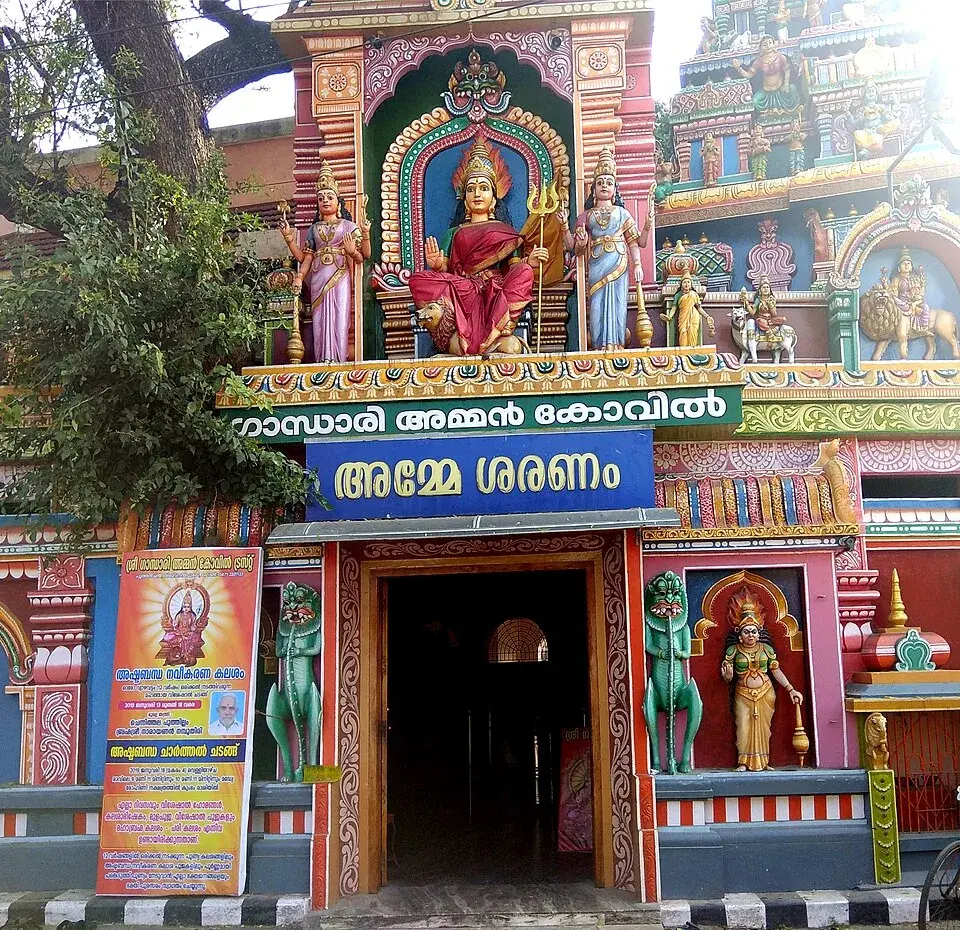 Photo: Ranjithsiji · CC BY-SA 4.0