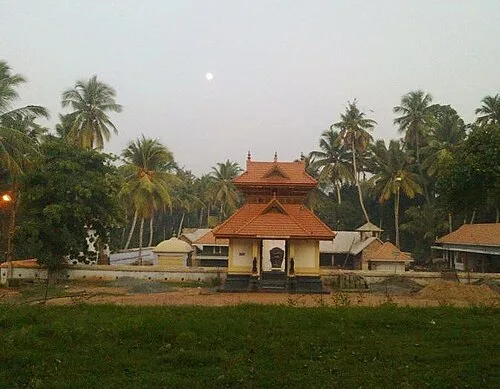
A Bhadrakali temple at Kulathoor near Uchakkada, known for its ten-day Kumbha Bharani festival and the vow of thookkam.
At a glance
What: A goddess temple celebrated for ritual art and vows.
Where: Kulathoor village, Neyyattinkara taluk.
When: Reported darshan 5.00 to 12.10 and 5.00 to 7.30; festival in Kumbham.
How: By road from Neyyattinkara, Parassala or Poovar side.
By whom: The temple trust.
For whom: Devotees, vow keepers and those interested in southern temple ritual.
The temple
Phanamugham Devi temple is described as an ancient and well known shrine of Kulathoor. The principal deity is Bhadrakali. The village lies in the southern coastal plain close to the Tamil border, where goddess festivals of great energy are a distinctive part of the year.
Two Kulathoors
There is a Kulathoor near Kazhakkoottam, famous for the Kolathukara Shiva temple, and this Kulathoor near Uchakkada in Neyyattinkara taluk. Travellers should name the taluk when asking directions, since a mistake would send them some thirty kilometres astray.
The name
Phanamugham brings to mind phana, the hood of a serpent, and mukham, face, though the temple's own explanation was not found in the sources consulted. It would be unwise to build a legend upon sound alone. Those who know the traditional account are invited to share it.
The goddess
Bhadrakali is worshipped as the mother who destroys evil and protects her children. In Kerala her central myth is the killing of Darika. In southern temples her presence is often made visible through a decorated crown form carried in procession, accompanied by drums and song.
The Darika story
The demon Darika received a boon that made him seem unconquerable: no man, god or animal could slay him. Overlooking women in his pride, he met his end at the hands of the goddess born of Shiva's wrath. Ritual art throughout Kerala retells the combat in painting, song and dance.
Staging the battle
A ritual known as nilathil poru, the battle on the ground, re-enacts the fierce fight between Kali and Darika. Performers pursue and confront one another across the temple surroundings, watched by large crowds. The drama usually unfolds over hours and ends with the victory of the goddess.
Mutiyettu and its cousins
Similar enactments exist across the state. Mutiyettu of central Kerala, recognised by UNESCO as intangible cultural heritage, and the paranettu of the south both present the Darika episode. Each region has its own costume, music and sequence. The form seen here should be appreciated on its own terms.
Thookkam
The chief ritual is the nercha thookkam, the hanging offered in fulfilment of a vow. After a period of discipline, performers are raised on a frame as an offering of themselves. Parents may make this vow in thanks for a child. In modern practice rules restrict the participation of children and require safety arrangements.
Meaning of a vow
A nercha is a promise made in a moment of need and honoured when help is felt to have come. It may be a coin, a lamp, a meal or an act requiring endurance. The practice binds personal history to the temple, and festivals are full of people quietly keeping such promises.
Kumbha Bharani
The ten-day annual festival falls in the month of Kumbham, February to March, in step with the Kumbha Bharani season. One listing gave 14 to 23 February for 2026. Dates change each year with the star calendar, so consult the current notice for 2027 and later.
Festival programme
Expect the raising of the festival flag, daily pujas, thottam or other devotional songs, cultural performances, processions, the ritual battle and the thookkam toward the climax. Food offerings and communal meals are usual. The order and timing are set by the trust.
Daily worship
Listings give morning darshan from five until a little after noon, longer than at many temples, and evening darshan from five to half past seven. Hours may change outside the festival season. Telephone or ask locally before a long journey.
Offerings
Lamps, red flowers, kumkumam, archana, sweet payasam and the red ritual liquid called guruthi are associated with goddess worship. The temple counter will explain what is customary here and the fees, and some offerings must be booked in advance.
Community
A festival of this scale depends on the labour of the whole locality: building temporary stages, raising funds, feeding visitors and managing traffic. Young people learn skills from elders, and migrant workers time their visits home to match it.
Border country
Uchakkada and its neighbourhood belong to the old south Travancore cultural region that now spans two states. Tamil and Malayalam speakers attend one another's festivals, and music and ritual styles pass across the line without much regard for it.
Belief and fact
Accounts of the temple's great age and the power of the goddess express faith and local pride. No founding record was located. The festival, thookkam and location are consistently reported by listings, which is what this page relies upon.
Visiting with respect
Wear traditional modest clothes, remove footwear and keep out of the performance area. Do not touch performers or costumes. Ask before photographing, and never use flash near participants in a ritual state.
Getting there
Neyyattinkara and Parassala have railway stations and frequent buses toward Uchakkada. Thiruvananthapuram International Airport is about thirty kilometres away. Autorickshaws reach the temple from Uchakkada junction.
When to come
Late February offers the festival in warm, dry weather. For a quiet darshan, come on a weekday outside Kumbham. Evenings are pleasant for travel.
Nearby places
Poovar's estuary, the Puthiyathura church, Arumanoor's Nainar temple, Chenkal's temples and Vizhinjam can be combined.
Facilities
Village shops are near; lodging is available toward Poovar and Kovalam. Festival stalls provide refreshments. There is no entry fee.
Watching a ritual drama
Performances of the goddess's battle are acts of worship before they are spectacle. Find a place early at the side, sit or stand where volunteers direct and let the performers pass without obstruction. Loud commentary, drones and sudden lights disturb both the artists and devotees. Small children may be frightened by the costumes and drumming, so hold them and be ready to step back.
Learning more
Older performers can explain the meaning of colours, ornaments and movements. Ask after the event, never during it, and record their names with permission so that their knowledge is credited to them.
Planning the journey
Roads near the temple close or crowd on the main days. Use buses to the nearest junction, walk the last part and settle your return in advance, as services thin out late at night. Carry drinking water and a small torch.