An old stone temple at the southern edge of Kerala where Shiva faces west, remembered for welcoming worshippers across caste lines.
At a glance
What: A centuries old Shiva temple with an unusual orientation.
Where: Parassala, the southern border town of Thiruvananthapuram district.
When: Centuries old; the main ten day festival falls in the month of Medam.
How: Take a train or bus to Parassala and a short local ride.
By whom: Attributed to Mallen Chembakaraman, a dalawa connected with the Venad royal house.
For whom: Devotees of Shiva, heritage lovers and travellers on the southern road.
About the temple
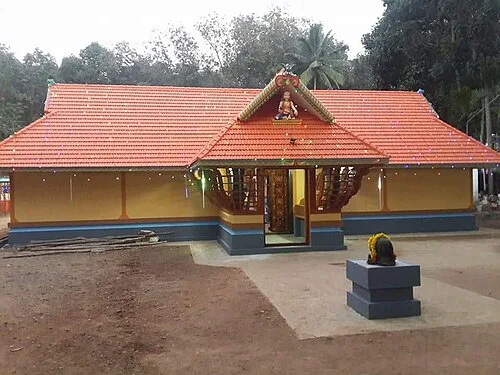
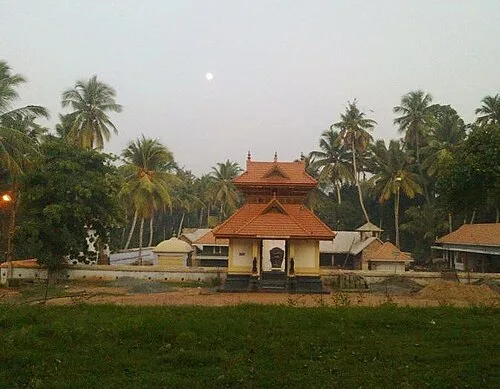
Just before the road leaves Kerala for Tamil Nadu, the town of Parassala keeps one of the principal places of worship of the far south. The presiding deity is Shiva, and he faces west, an arrangement considered rare, since most Shiva sanctums look east. Behind him, facing east, is the goddess Parvati, so that the divine couple are placed back to back within one sacred space. Ganesha is the other deity receiving particular attention.
Visitors speak of the stone workmanship, which sets the temple apart from the many timber and laterite structures of the region and reflects the meeting of Kerala and Tamil building habits in this border country. Devotees travel from distant places for the rites here.
History
The temple is described as centuries old. Its construction is credited to Mallen Chembakaraman, referred to as a dalawa, the title of the chief minister in the old southern kingdom, and associated with the Venad royal family, from whose territory the state of Travancore later grew. Detailed dated records are not available in the sources used for this page, so the attribution should be understood as the traditional account.
What stands out in that account is the temple's openness. It is said that from early times people of all communities were allowed entry, irrespective of caste or creed, at a period when many temples excluded large sections of society. The Araya community, traditionally associated with the sea, holds a privilege of participating in the commencement of important rituals. Accounts also mention that a family of the Paraiyar community has the role of supplying the rope for the festival flag and certain items for the festival offerings. Parassala as a whole is known for harmony between communities.
The legend of the stone
A story told about the origin of the linga concerns a woman named Neeli. While cutting bamboo, she struck a stone with her blade, and blood began to flow from it. Recognised as a manifestation of Shiva, the stone became the centre of worship. The tale comes down as folklore, and the written version consulted is brief, so details may differ in local telling.
Stories of stones that bleed when struck by a forest worker or grass cutter are told at many temples across South India. They share a pattern in which an ordinary labouring person, often a woman or someone of humble standing, is the first to meet the deity. Read alongside the temple's reputation for open entry, the story of Neeli carries a gentle claim that holiness was first disclosed to those whom society often overlooked.
Festivals and ritual life
The great annual festival lasts ten days. It begins with kodiyettam, the raising of the temple flag, on the day of the Thiruvathira star in the Malayalam month of Medam, in April or May, and concludes on the tenth day with the arattu, when the deity is taken for a ceremonial bath. Processions, music and offerings fill the days between. Maha Shivaratri is also observed, with prayer through the night.
During the year, devotees make the usual offerings of Shiva temples, such as the pouring of water in a continuous stream, lamps, garlands of bael leaves and special archana in their own name and birth star.
Beliefs, claims and facts
It is believed that Shiva here blesses all who come, whatever their background, and many families make the temple the place for important vows. West facing shrines are sometimes said to possess special power; this is a belief within temple tradition and not a measurable fact. Online listings give differing details of age and legend, and visitors who need accurate history should ask the temple office about inscriptions or records.
A border country
Until the reorganisation of states in 1956, the territory on both sides of Parassala belonged to the same kingdom and later to the combined state of Travancore-Cochin. When linguistic states were formed, the largely Tamil speaking southern taluks went to Madras State, now Tamil Nadu, and the line was drawn just beyond the town. Families, markets and temple connections still cross it every day. This background explains why the traditions of Parassala feel at once thoroughly Malayali and closely linked with Nanjil Nadu to the south, in food, speech, music and building style.
What to notice
Look at how the stone courses are fitted, how lamps are arranged around the shrine, and how worshippers move between the western and eastern sides to honour both Shiva and Parvati. Notice the flagstaff and open space where the festival begins. If an older devotee is willing to talk, ask what the festival was like in their childhood; such memories preserve details that no signboard records.
Visiting
Follow the local dress code, with men usually removing shirts inside and women wearing modest dress. Leave footwear outside, switch phones to silent and ask before taking pictures. Priests and elders can explain the order of worship, which differs slightly from east facing temples because of the orientation. The sanctum closes for part of the day.
An hour allows unhurried worship and a look at the stonework. Festival days require much longer and some patience with crowds.
Questions visitors ask
Why does the direction matter? Temple builders gave great thought to orientation, and an unusual one is remembered and explained through stories and ritual custom. Is Parassala far from the city? It is at the southern end of the district, roughly an hour or more by road depending on traffic, and trains are convenient. Can the visit be combined with places in Tamil Nadu? Yes, Marthandam, Padmanabhapuram Palace and the temples of Kanyakumari district lie further along the same road; remember that rules and holidays differ between the two states.
Around Parassala
The Neyyar river valley, the town of Neyyattinkara with its Krishna temple, Aruvippuram and its reform history, and the coast at Poovar are all within reach. Together they show a side of the district that fast travellers to Kanyakumari usually miss: paddy fields, plantain gardens, bilingual markets and old shrines where Malayalam and Tamil are heard side by side.
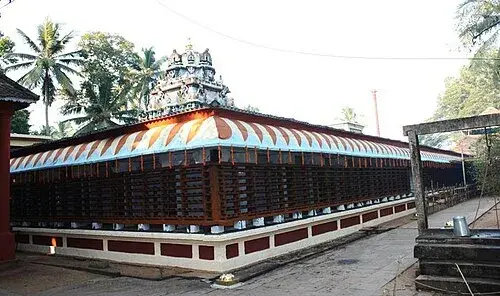 Photo: Sanalkumarsidhu · Public domain