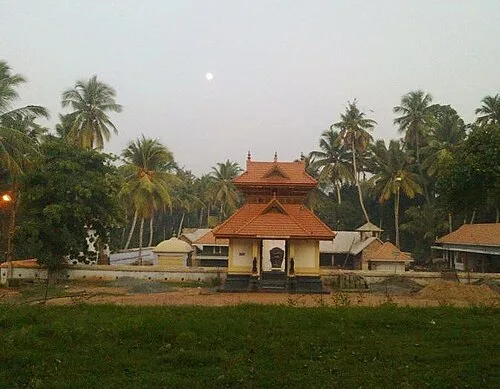
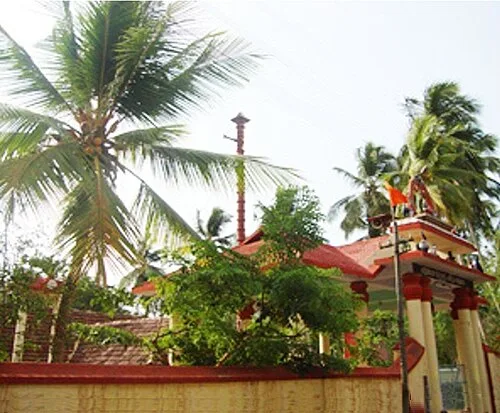
A temple at Keezhammakam where Shiva, Parvati and Ganapati are enshrined together on a single pedestal, a rare arrangement.
At a glance
What: A temple of the divine family of Shiva, Parvati and Ganapati.
Where: Keezhammakam in Chenkal panchayat.
When: Daily worship; chief festivals at Shivaratri, Chitra Pournami and Vinayaka Chaturthi.
How: By road from Neyyattinkara or Parassala.
By whom: The Sree Rajarajeswari Temple Trust.
For whom: Devotees, families and visitors touring the Chenkal temples.
Three on one seat
The distinctive feature of this temple is that Shiva, Parvati and Ganapati reside together on the same pedestal. A Malayalam description calls it an extremely rare shrine for that reason. Instead of separate doors for father, mother and son, the devotee sees the household as one, and offers a single prayer to all three.
The meaning of the family
The family of Shiva is cherished as a model of unity among differences. Their mounts, the bull, the lion and the mouse, would be natural enemies, yet live in peace. Preachers draw from this a lesson for homes where temperaments differ. A shrine showing the three together lends that idea visible form.
Shiva and Shakti
Shiva is understood as pure awareness and Shakti as the power that acts. Neither is complete alone. The temple's name joins the two with Mahaganapati, the great lord of beginnings. Devotees approach it to ask for harmony in marriage, success in studies and the removal of obstacles.
How Ganapati was born
In the best known story, Parvati formed a boy to guard her door. Not knowing him, Shiva cut off his head when the child barred his way, and then restored him with the head of an elephant and set him foremost among worshipped beings. This is why Ganapati is invoked before any undertaking.
Management
The affairs of the temple are directed by the Sree Rajarajeswari Temple Trust. Trust-managed temples organise their own calendar, fees and maintenance. Enquiries about booking a ritual or sponsoring a day's worship should be made at its office.
Vinayaka Chaturthi
Ganesha's festival, on the fourth day of the bright half of the month falling in August or September, is celebrated grandly here. Special homams, offerings of modakam and sweets, decoration and large gatherings are usual. In many places the day ends with the immersion of clay images in water.
Maha Shivaratri
The great night of Shiva is another principal festival. Abhishekam continues through the night, devotees fast and keep vigil, and lamps light the compound. With Parvati beside him in this shrine, the night also recalls their marriage.
Chitra Pournami
The full moon of the month of Chithira, around April, is celebrated as a third major festival. Chitra Pournami is popular in southern temples near the Tamil border, with processions, milk pot offerings and special worship to the goddess. Ask for the current year's date and programme.
Offerings
Ganapati homam at dawn, appam, modakam, archana, lamps, bilva garlands and payasam suit the three deities enshrined. Couples sometimes sponsor a joint offering. The counter will advise on customary choices and their fees.
Chenkal's temples
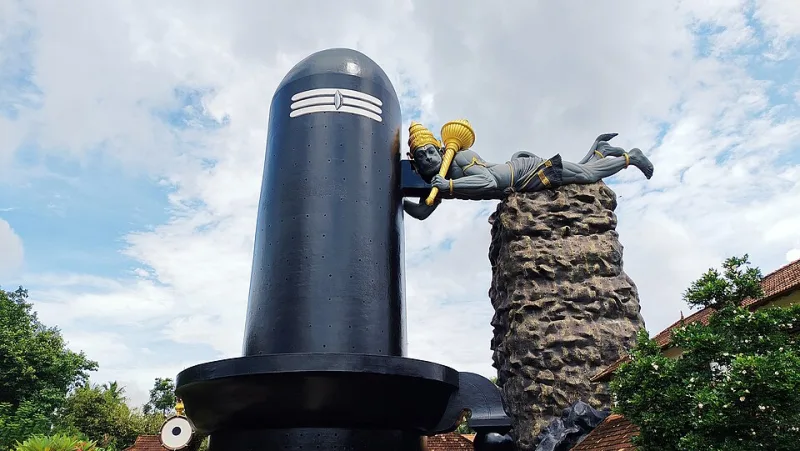
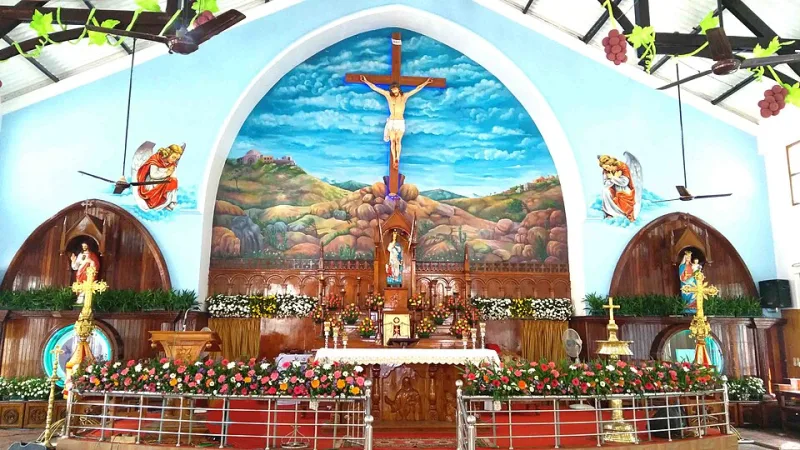
Chenkal panchayat is a notable cluster of worship places. The Maheswaram temple with its very tall Shivalinga draws visitors from far away, and the Marian church at Vlathankara is nearby. A pilgrim or a curious traveller can see several within a few kilometres.
The land
The shrine stands in the low country near the Tamil border, a little under forty metres above sea level according to published coordinates. Coconut and banana gardens, ponds and narrow roads characterise the area. The heat is gentler in the early hours.
Visiting with respect
Wear modest traditional clothes, remove footwear, and keep silence at the sanctum. Photographs inside need permission and are normally refused. On festival days follow volunteers' directions and avoid pushing in queues.
Getting there
Neyyattinkara and Parassala are the nearest towns with railway stations and bus services. Autorickshaws run to Chenkal. Thiruvananthapuram International Airport is about thirty kilometres away.
When to come
Any morning is suitable. The three annual festivals offer the fullest experience. November to February is the pleasantest season for the roads.
Nearby places
Chenkal Maheswaram temple, Arayoor Mahadeva temple, Parassala Mahadeva temple, Vlathankara church and Neyyattinkara's temples can be combined.
Facilities
Village shops and tea stalls are near. Fuller services are in the two towns. There is no entry fee.
Help complete this page
Share the temple's founding story, the trust's contact details and photographs using the links on this page.
A family visit
Children often take readily to Ganapati. Let them watch the offering, learn why he is honoured first and share the sweet prasadam afterwards. A short, cheerful visit leaves a better memory than a long wait in the heat.
Seeing the shrine
When your turn comes at the sanctum, look carefully and briefly: the three presences on their shared seat are what sets this temple apart. Priests are busy at the door, so save questions for a quieter moment. If you are told how the arrangement came to be chosen, treat it as the temple's own account and record who explained it.
Parvati's place
In many Shiva temples the goddess has a separate shrine or is worshipped unseen behind the linga. Here she shares the pedestal openly. Women often come to pray for the welfare of husbands and children, and unmarried devotees for a suitable partner. Offerings of turmeric, vermilion and red flowers are commonly associated with the goddess.
Learning and exams
Students visit Ganapati shrines before examinations, interviews and journeys. Teachers sometimes point out that the large ears suggest listening well and the small eyes close attention. Prayer can steady the nerves; preparation does the rest. It is a pleasant custom to give thanks afterwards, whatever the result.
The festival crowd
On Vinayaka Chaturthi the narrow village road can fill quickly with worshippers, sellers and vehicles. Park where directed, keep valuables secure, carry water and agree on a meeting point if you come as a group. Where clay images are immersed, prefer unpainted ones that do not foul ponds.
Combining visits
A practical plan is to begin here at opening time, move on to the tall Shivalinga at Chenkal while the day is cool, and finish at Parassala or Neyyattinkara before the midday closure. Distances are short, but temple doors shut in the late morning, so do not linger too long between them.
Keeping in touch
Festival timings are set afresh each year. Check with the trust before travelling, and share what you learn.
Offer what you can
A lamp or a simple prayer is welcome; nothing larger is expected.